
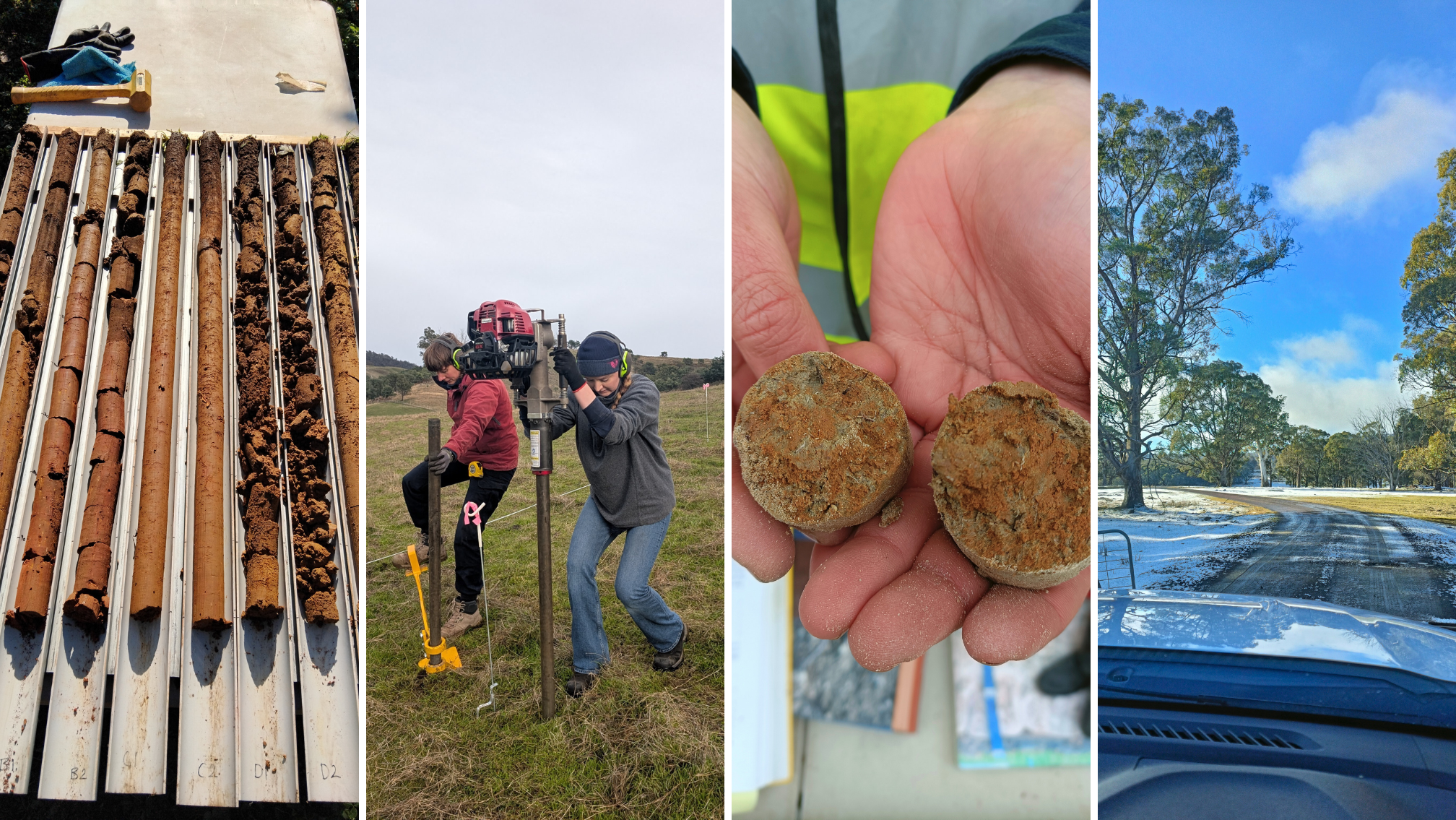
In anticipation of World Soils Day on December 5, our Land Program Project Officer has offered a behind the scenes glimpse into what goes into a typical day of soil sampling – part of our National Soil Monitoring Program project that is being led by the CSIRO.
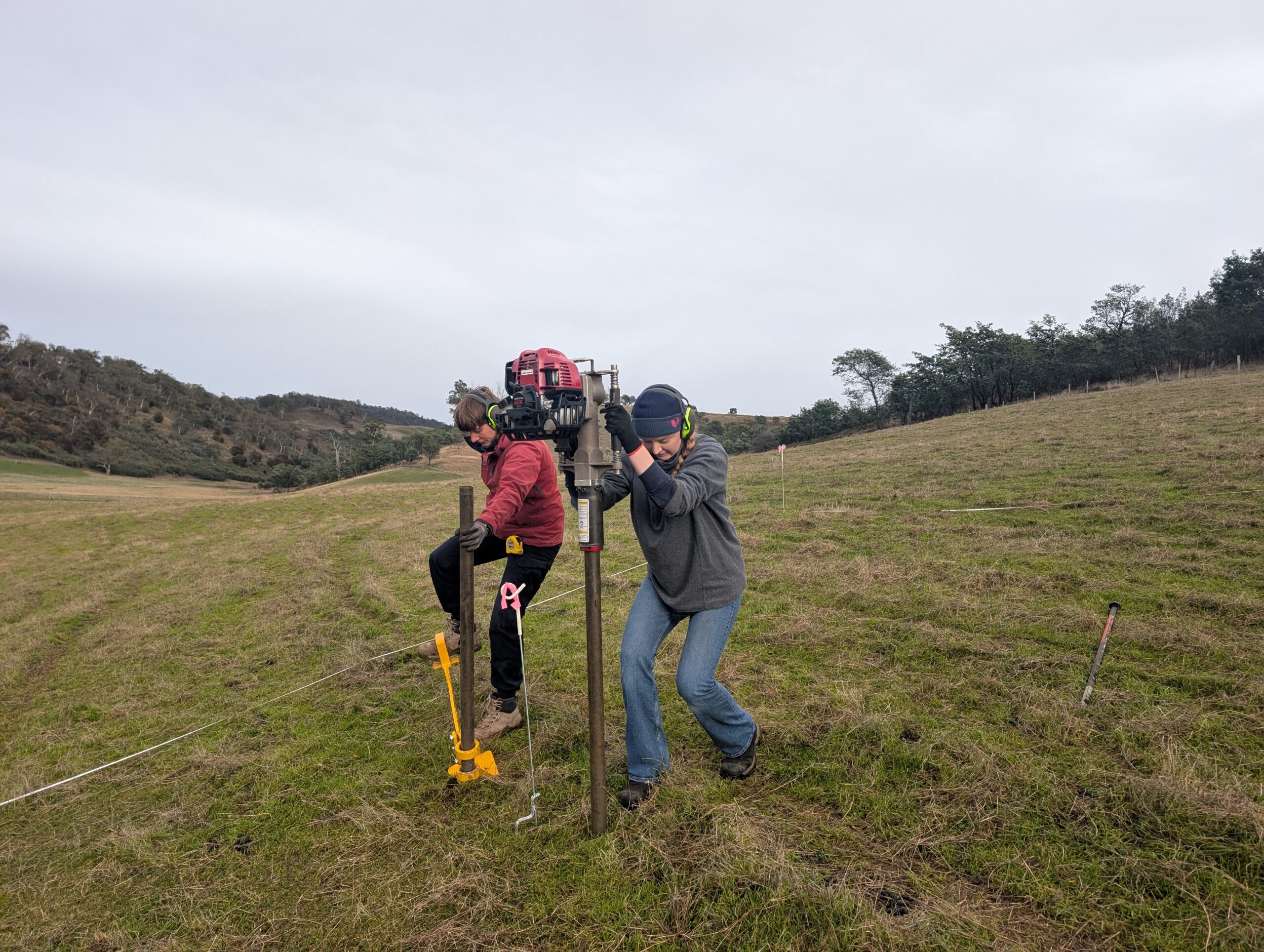
Prepped and ready, the NRM South soil sampling team rolls out at 7:30am, heading toward our next site with a freshly cleaned Ute – no biosecurity risks on our watch. The back of the ute is packed tight with specialised sampling gear: a powerful rammer, long coring tubes, high accuracy GPS device, measuring tapes, toolboxes, a bright yellow “foot lever” (to remove the core once it has been rammed into the ground), and much more.
These early morning starts form part of our National Soil Monitoring Program. This CSIRO initiative is working with on-ground teams to collect soil samples from across Australia – and this is what it looks like behind the scenes down in southern Tasmania.


If time is on our side, we swing by a local café for a much-needed coffee (I always love a mocha or a dirty chai!) Then we’re back on the road, winding through Tasmania’s incredible patchwork of landscapes – misty rainforests giving way to long stretches of farmland, plantation rows marching along the hillside, open button grass plains, and jagged mountains keeping watch in the distance. Tasmania never fails to show off! (Check out the picture above left of the last time we were at Bruny Island).
We’ve crossed paths with some unforgettable locals too: echidna “love trains” shuffling through the poas, brilliant scarlet robins flashing between branches, and the breathtaking silhouette of a Wedge-tailed Eagle soaring overhead. Every trip reminds us how alive this island really is.
When we reach the site, we chat with the landholder about how they manage their land – grazing rotations, fertiliser use, soil management. Then it’s gloves on, gear out, and straight into setting up our 25m x 25m plot.
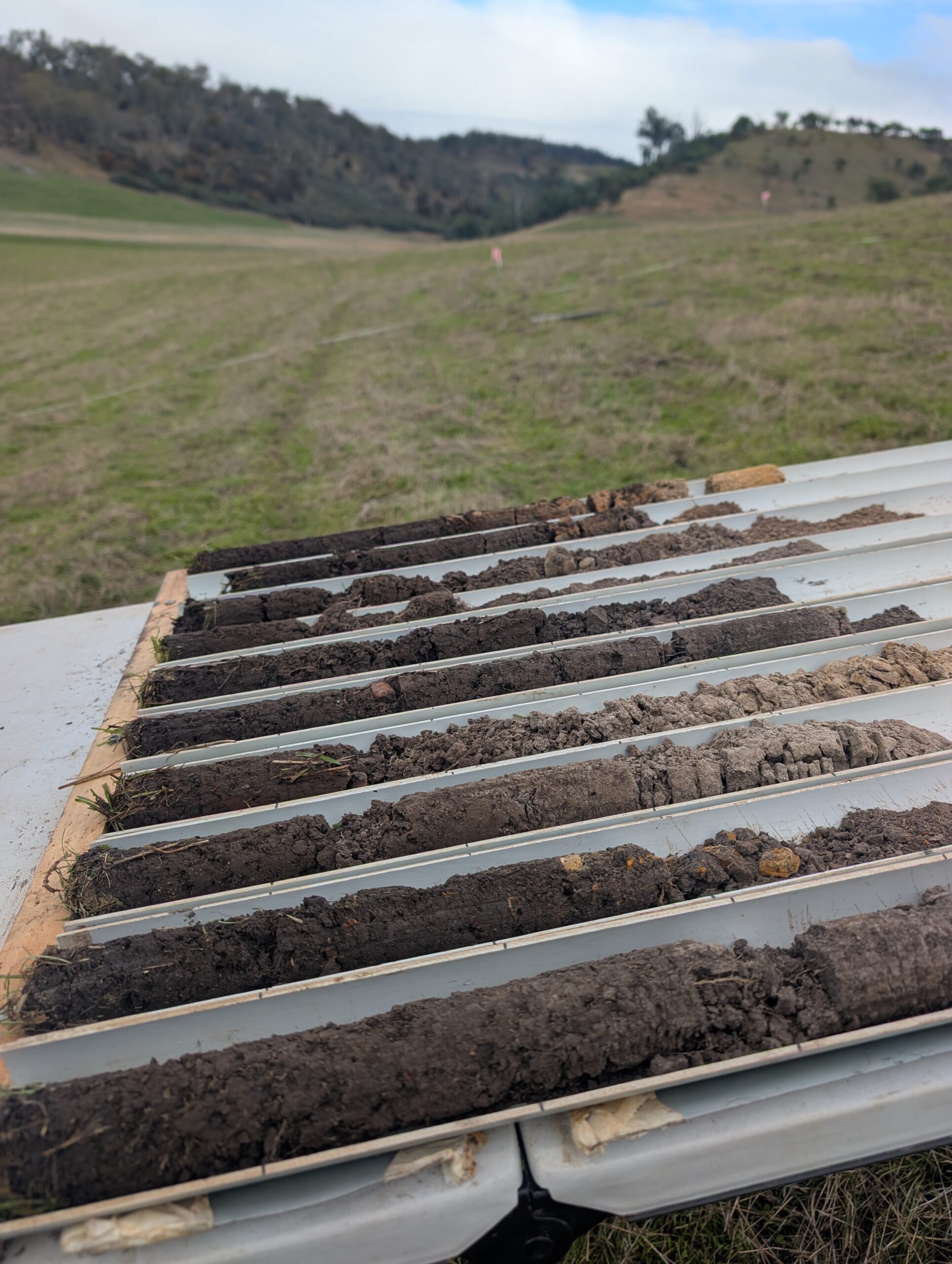
Over the morning, we collect ten deep soil cores – sometimes up to a metre long if we don’t hit rock – for chemical analysis. Then we take five shorter cores for biology tests. Each core we pull is a tiny time capsule, a story of how that soil has been managed and how healthy it is now.
I’m incredibly grateful to all the landholders who have welcomed us onto their properties. Their willingness to participate is what makes this work possible. With no national soil monitoring program currently in place to guide soil health information across Australia, the data we’re collecting here in Tasmania is laying the groundwork for something truly significant. I’m proud to be one small part of this big effort.
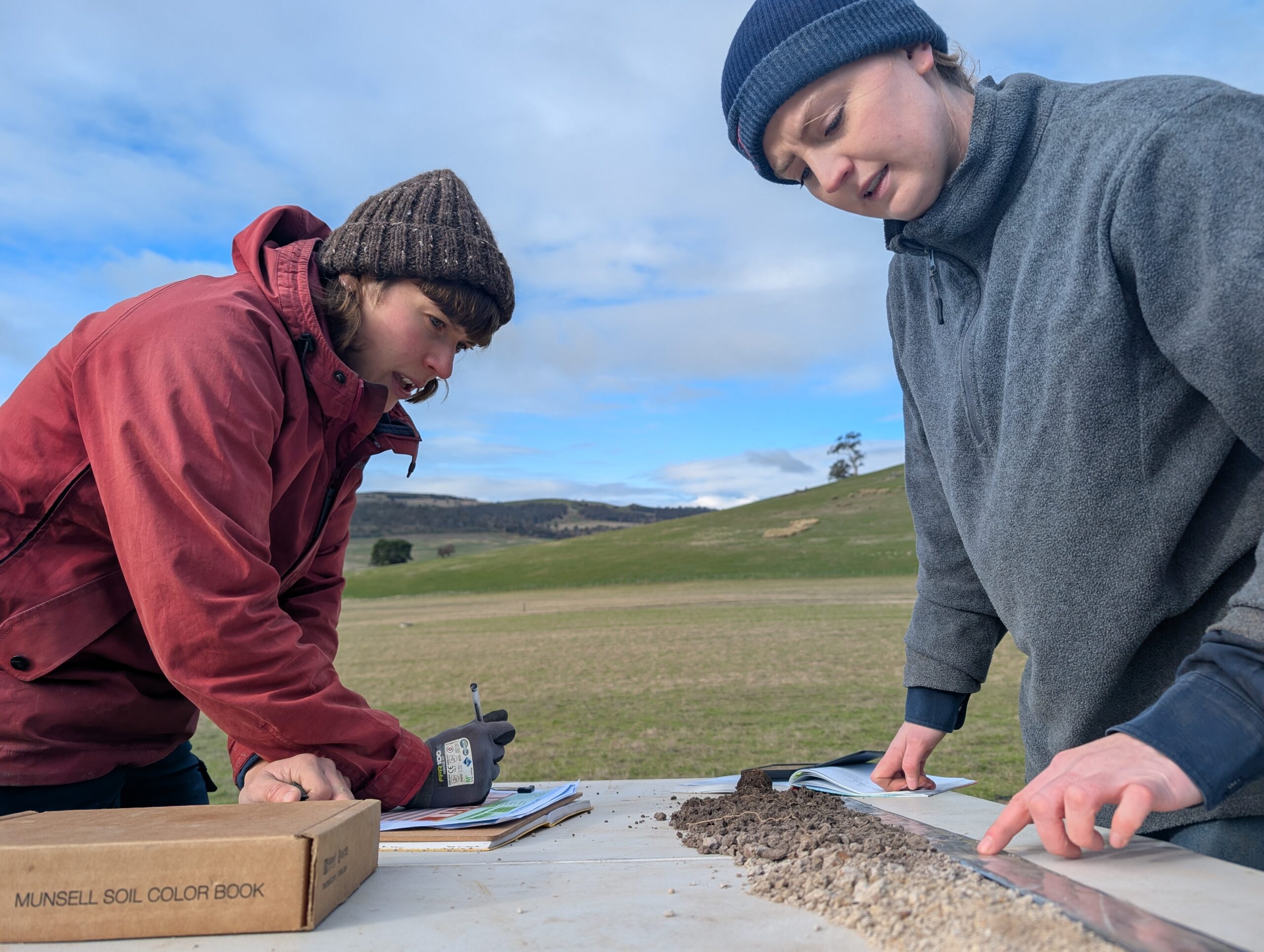
Right now, our team is reaching out to more landholders, confirming new sites, sampling more areas, and sending off soil samples to mainland labs for analysis. We’ve already completed over 90 sites out of 202, and every single one reveals something new.
Tasmanian soils hold incredible variation – texture, structure, colour, chemistry, biology. There is so much to learn and so much value in building capability and understanding in this space.
It’s a great place to be, especially for World Soils Day – feet on the ground, hands in the dirt, and eyes wide open to the stories our soils are telling.
Jacinta Leys – Project Officer, NRM South Land Program
This project has been supported by funding through the Australian Government Natural Heritage Trust (Department of Agriculture, Fisheries and Forestry) under the National Soil Monitoring Program in collaboration with the CSIRO.