
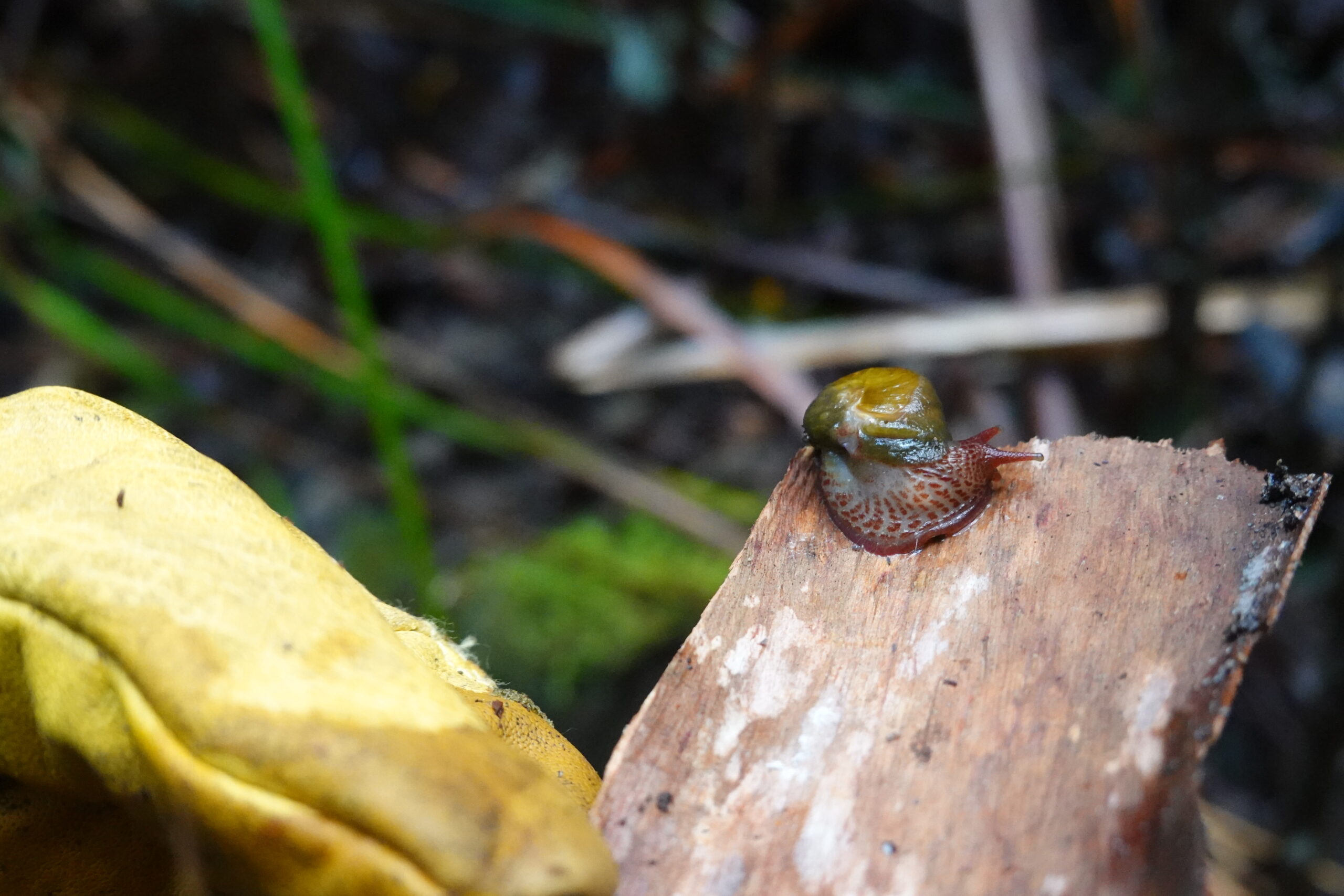
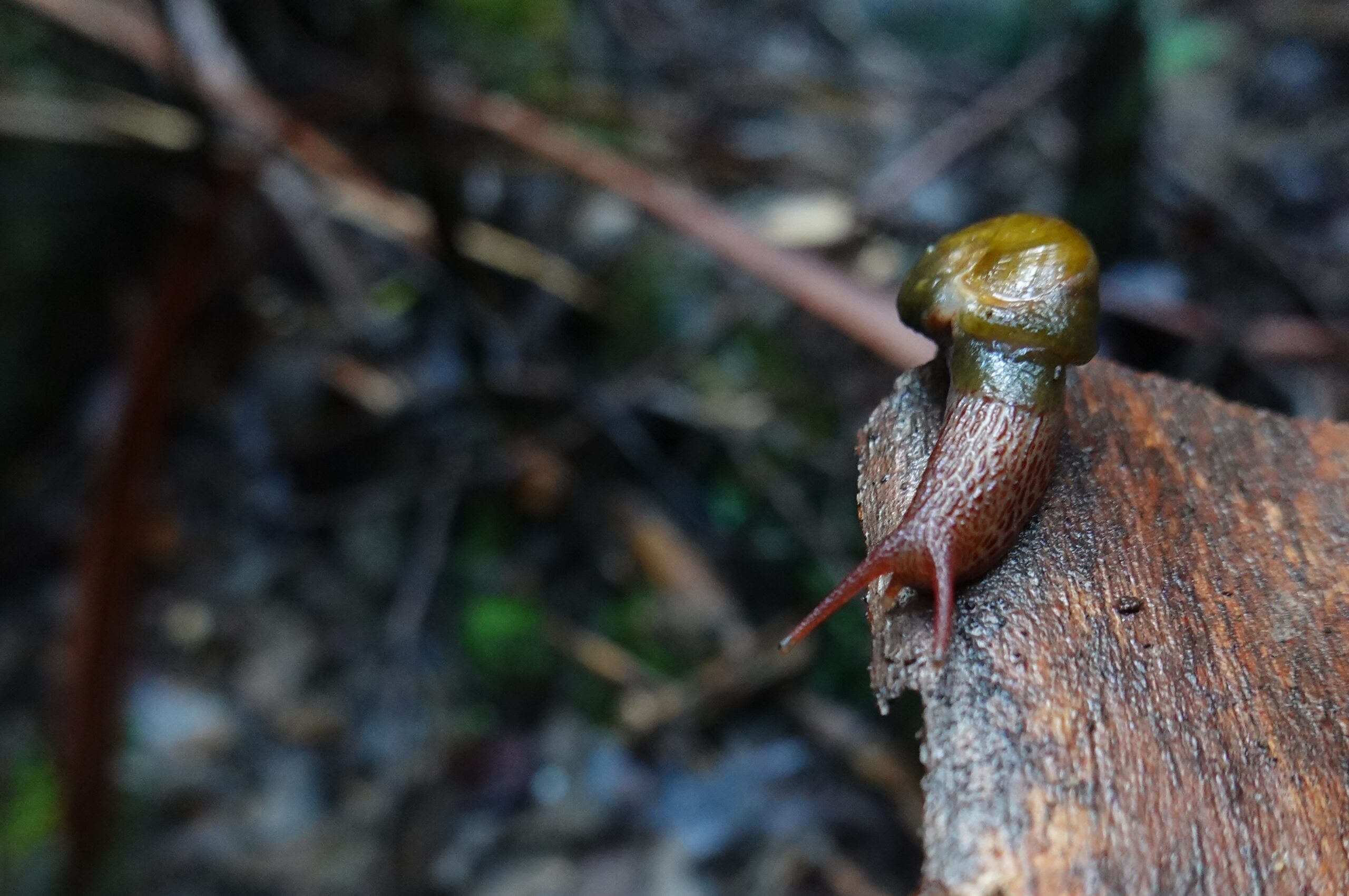
Hidden among curled strips of eucalypt bark on the damp forest floor lives one of Tasmania’s most distinctive native snails. The burgundy snail (Attenborougharion rubicundus) is a rare species found naturally only on the Forestier and Tasman peninsulas in south-east Tasmania and is named in honour of Sir David Attenborough.
It’s a species facing a number of threats. Parts of its known range on the Forestier Peninsula were affected by the large 2013 Dunalley bushfire, as well as smaller fires between 2003 and 2019. Much of its habitat also occurs within production forests, but until recently the long-term effects of forestry activities on burgundy snail populations were not well understood.
To better understand how the burgundy snail is faring, surveys were carried out across 75 sites during autumn and winter 2025 – funded through the Tasmanian Government’s Threatened Species Partnership Program. These surveys visited areas across the snail’s known range and compared current occurrence with historical records, including the last extensive survey completed in 1999 and a smaller follow-up survey in 2012.
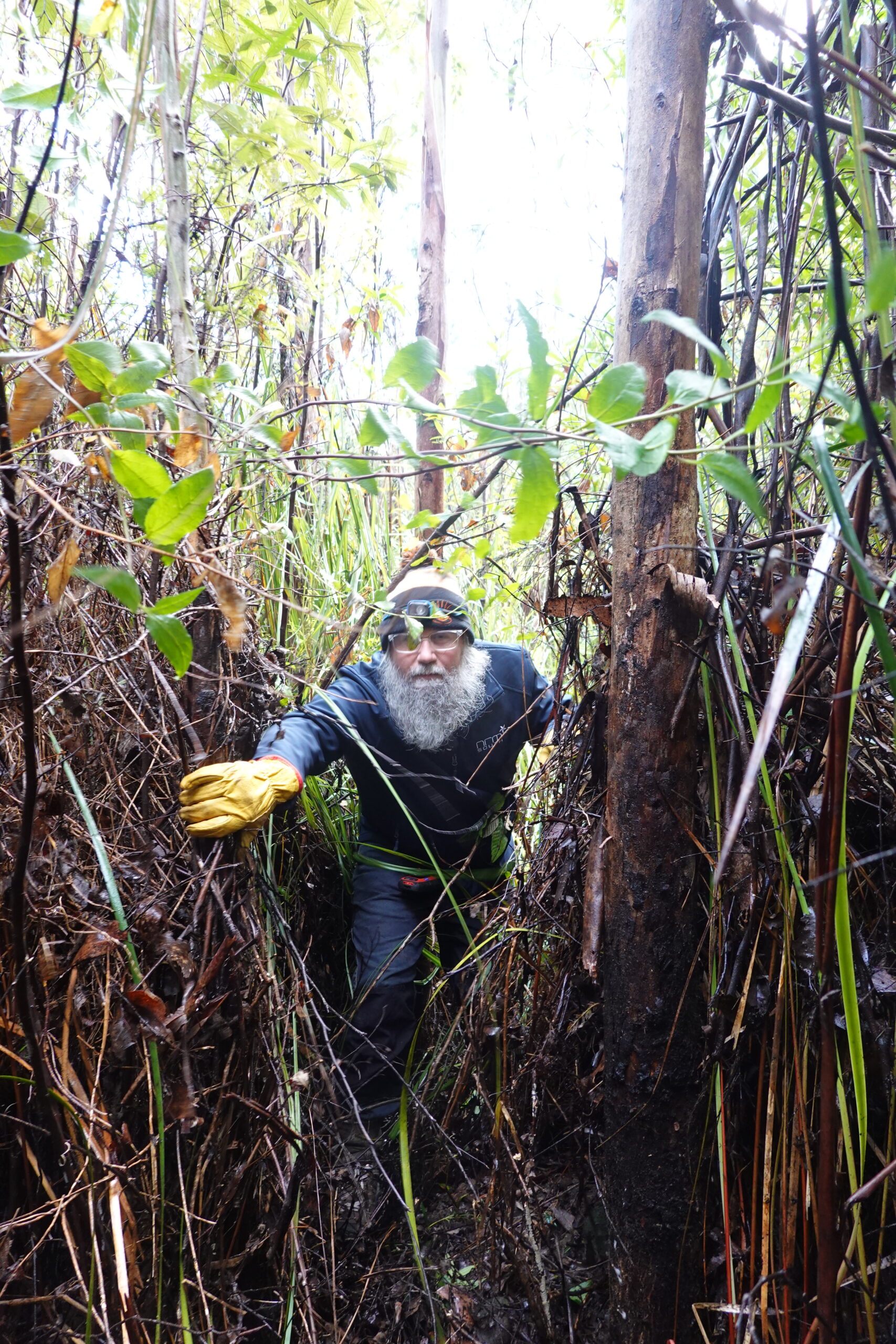
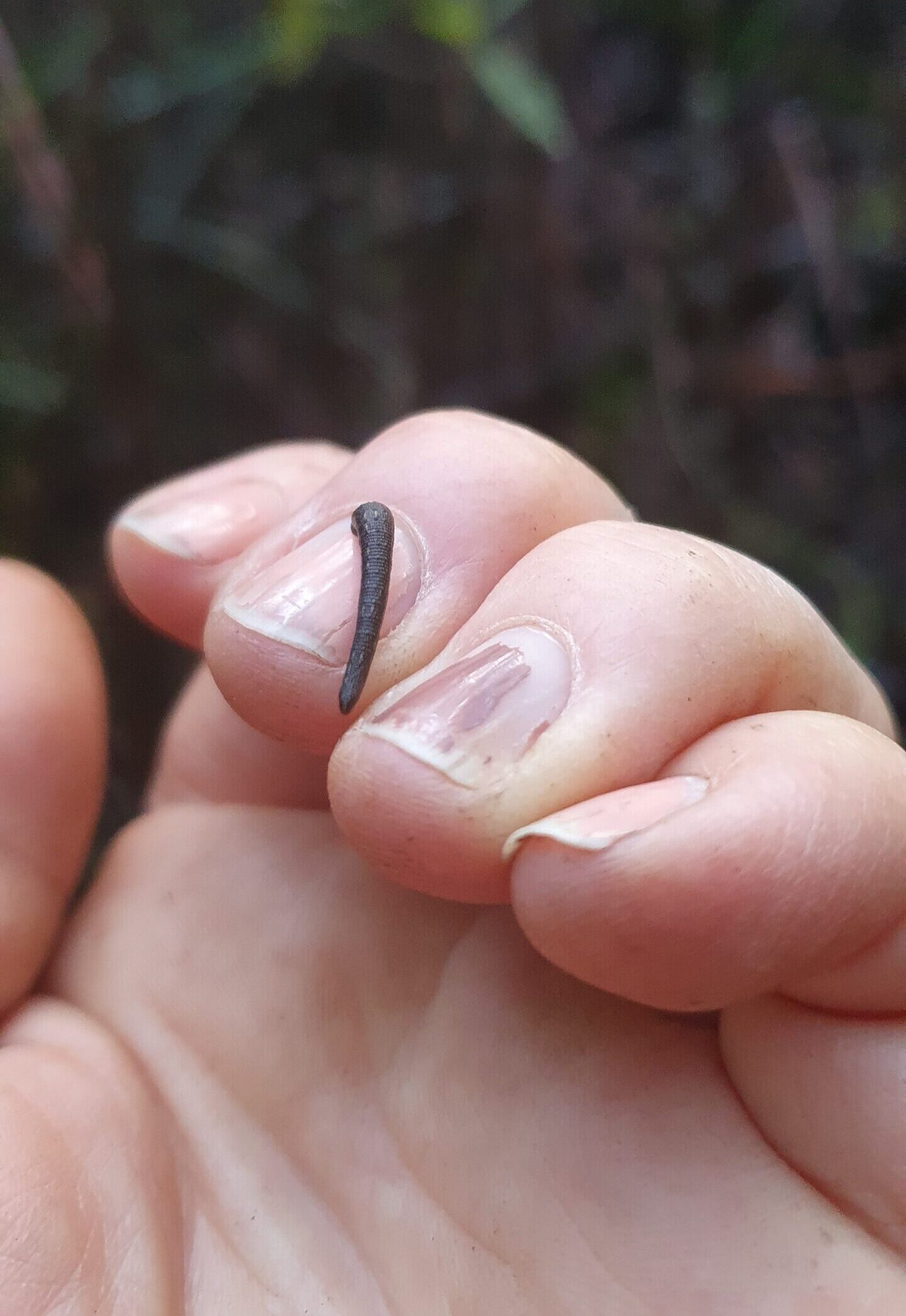
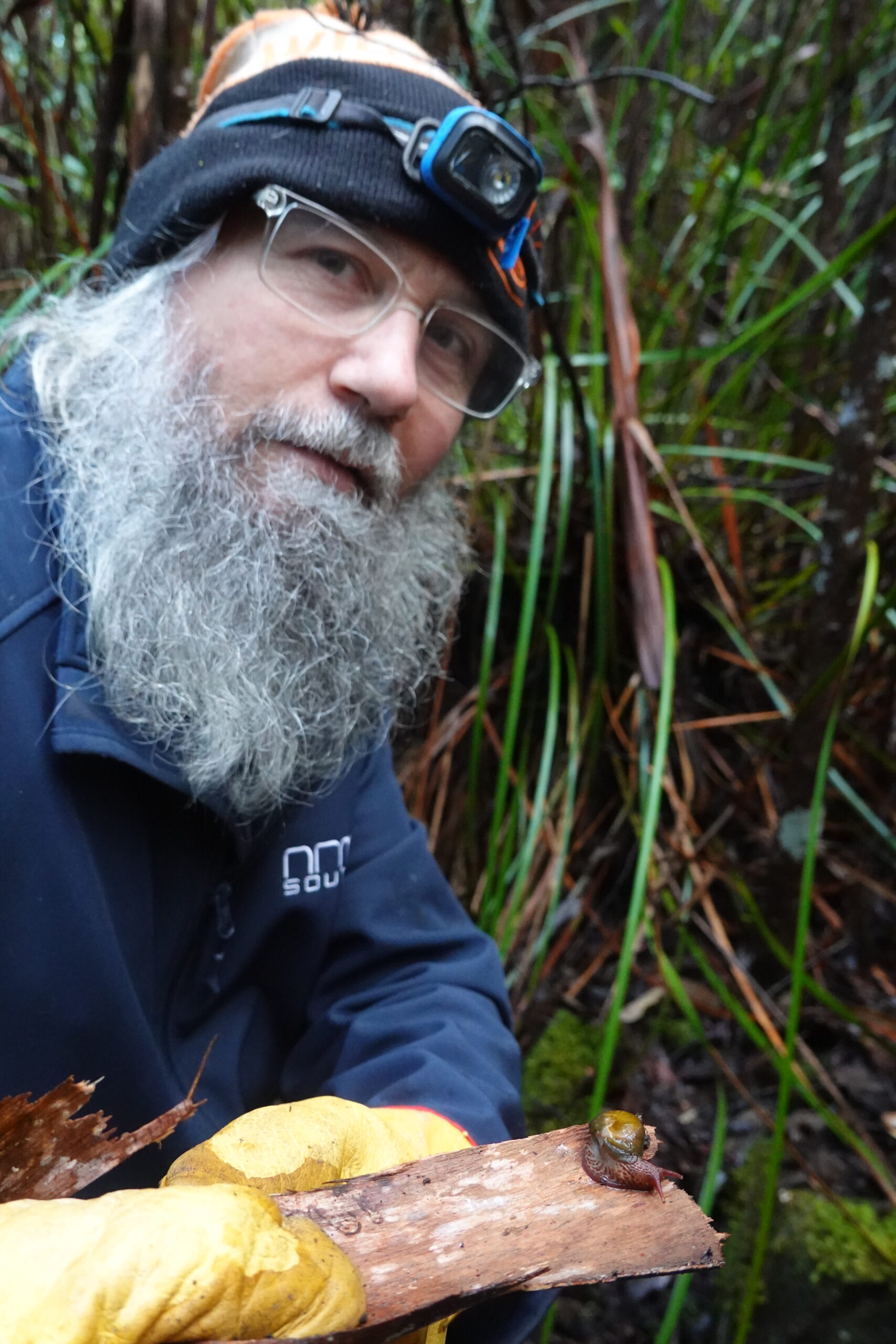
Encouragingly, the surveys showed that the burgundy snail remains widespread across much of its known range on the Forestier Peninsula, although it was less commonly detected on the Tasman Peninsula. The species was most often found in wet forests where long curled pieces of bark gather around the bases of trees, particularly under eucalypts such as blue gum and swamp gum. It was less common in forests dominated by stringybark-type trees, such as Eucalyptus obliqua, which do not provide the same kind of shelter.
A significant finding was that burgundy snails were also present in forestry plantations, typically among curled bark on the forest floor beneath the trees.
This is important because plantations have not traditionally been considered potential habitat for the species. The results also suggest that burgundy snails can return to areas affected by bushfire or timber harvesting if suitable habitat has time to recover, although this process may take many years.
Together, these findings provide important guidance for the conservation of a rare Tasmanian species with a very limited natural range. Retaining blue gum and swamp gum wet forest, recognising the potential value of plantations, and allowing enough time between harvest cycles for habitat to redevelop will all help support the burgundy snail into the future. Further monitoring, climate change research and genetic studies would also help clarify how secure and connected populations are over the long term. Thanks to our project partners the Forest Practices Authority and Sustainable Timbers Tasmania for their support with this project.
NRM South is supported by the Tasmanian Government. Click here to read more about the project.