
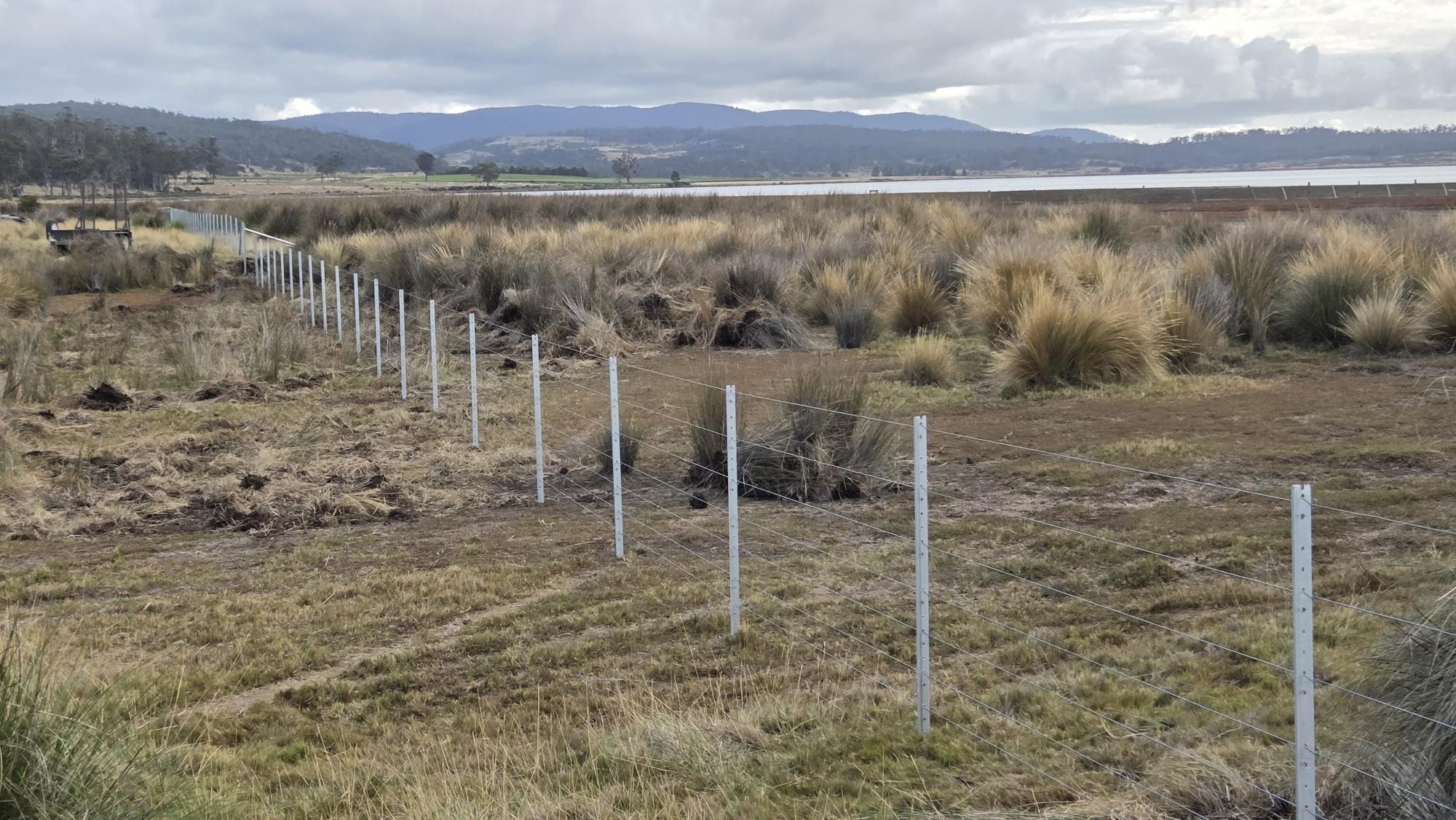
NRM South have been working in and around the internationally significant Moulting Lagoon and Apsley Marshes Ramsar wetlands on Tasmania’s east coast for two decades. Since 2019, our efforts across two complementary projects – ‘Supporting Significant Wetlands’ (current) and ‘Important Wetlands‘ (2019-2023) have seen us working with landholders along the eastern shore of this wetland complex to protect and restore the degraded riparian and saltmarsh areas that sit on private land.
Landholder participation is key to the success of this work and since 2019 we have collaborated with five landholders adjacent to this important wetland habitat. This has led to successful outcomes including the completion of 9 hectares of hydrological restoration, close to 800 ha of weed control work, and over 40 ha of revegetation established.
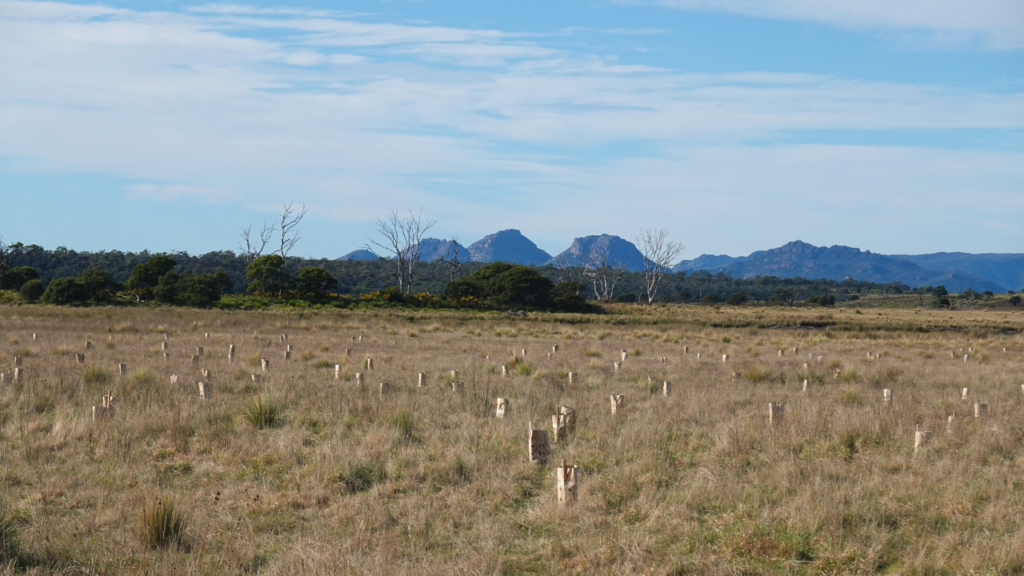
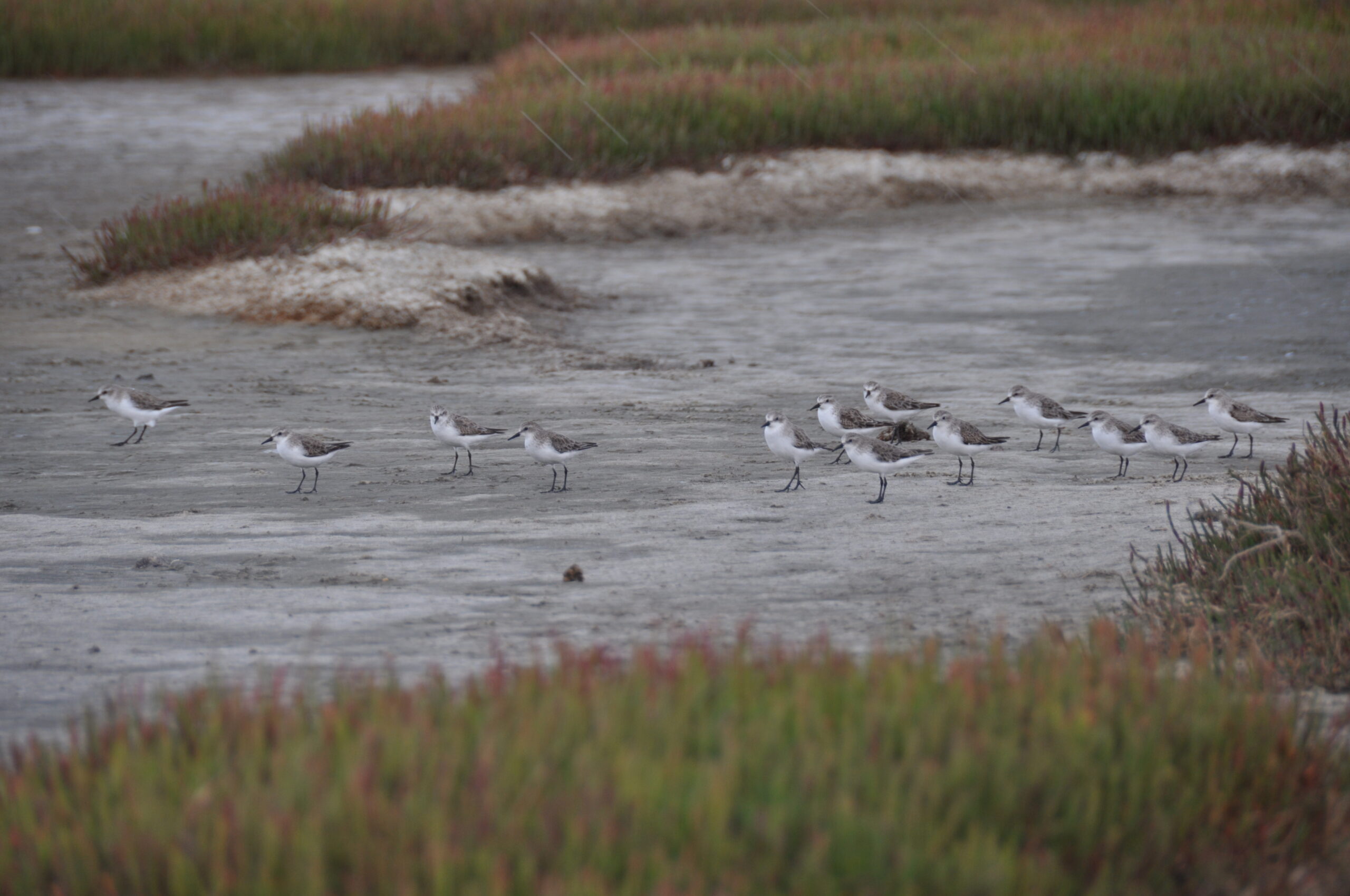
Another important conservation intervention within this delicate saltmarsh landscape is fencing. This helps prevent the movement of cattle across sensitive wetland sites and allows this important ecosystem to recover and re-establish.
Recently we have celebrated another win for this landscape in welcoming a new landholder from Cranbrook Estate – a family owned and operated farm producing superfine merino and grapes. Our project team have been working closely with the landholder to develop an approach that will protect the natural values that exist across their property.
The Cranbrook Estate property boasts 3.8km of coastline adjoining Moulting Lagoon/Apsley Marshes. Over 1km of this has been historically unprotected, resulting in severe degradation of almost 8ha of saltmarsh on the property. See the image below for a stark comparison between an area of protected saltmarsh on the property and the unprotected area.
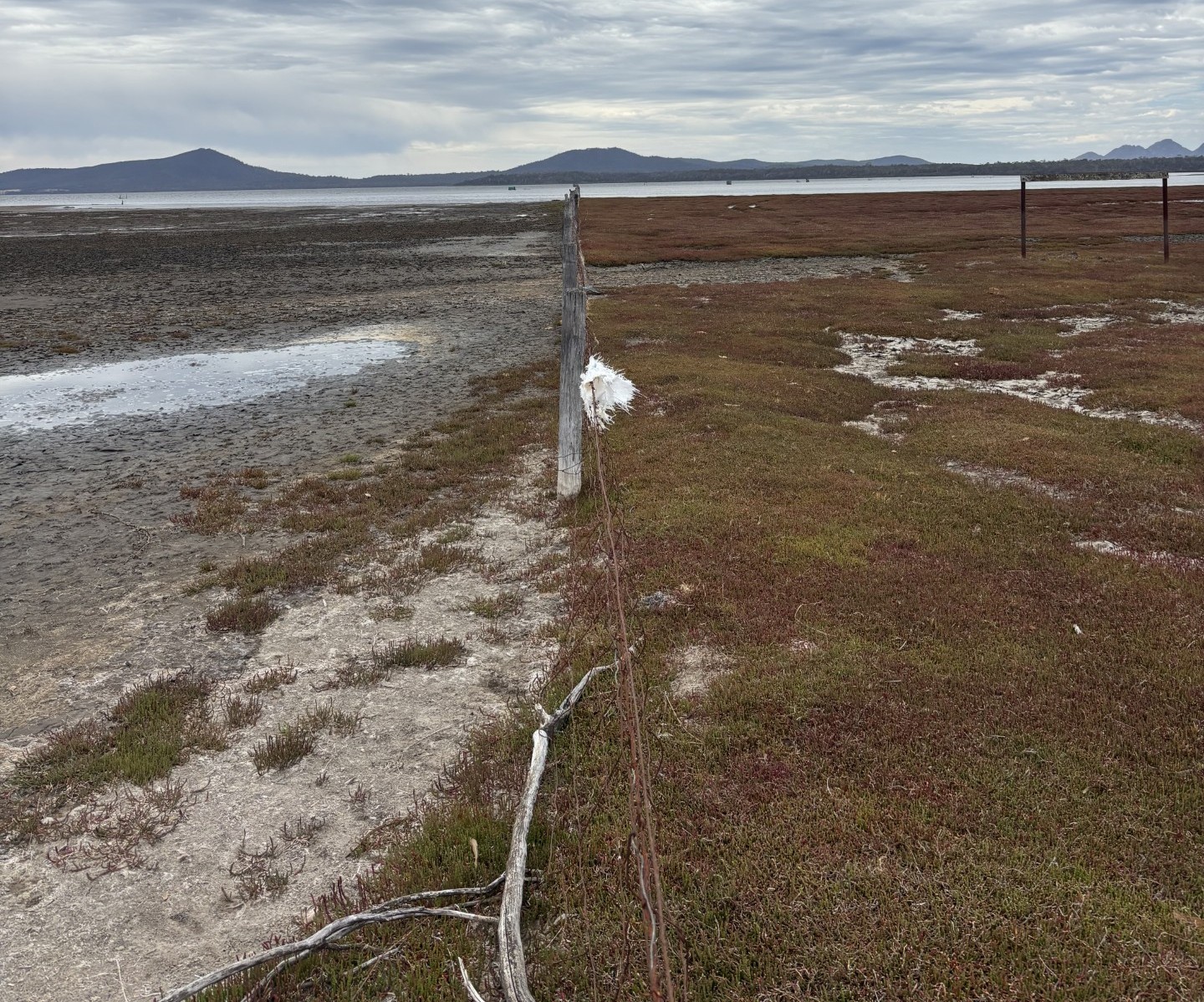
Working with the landholder, we have supported the installation of 1.3km of fencing across the property to restrict stock from this fragile ecosystem and give it a chance to recover. This brings the total amount of fencing installed since 2019 to 13 km.
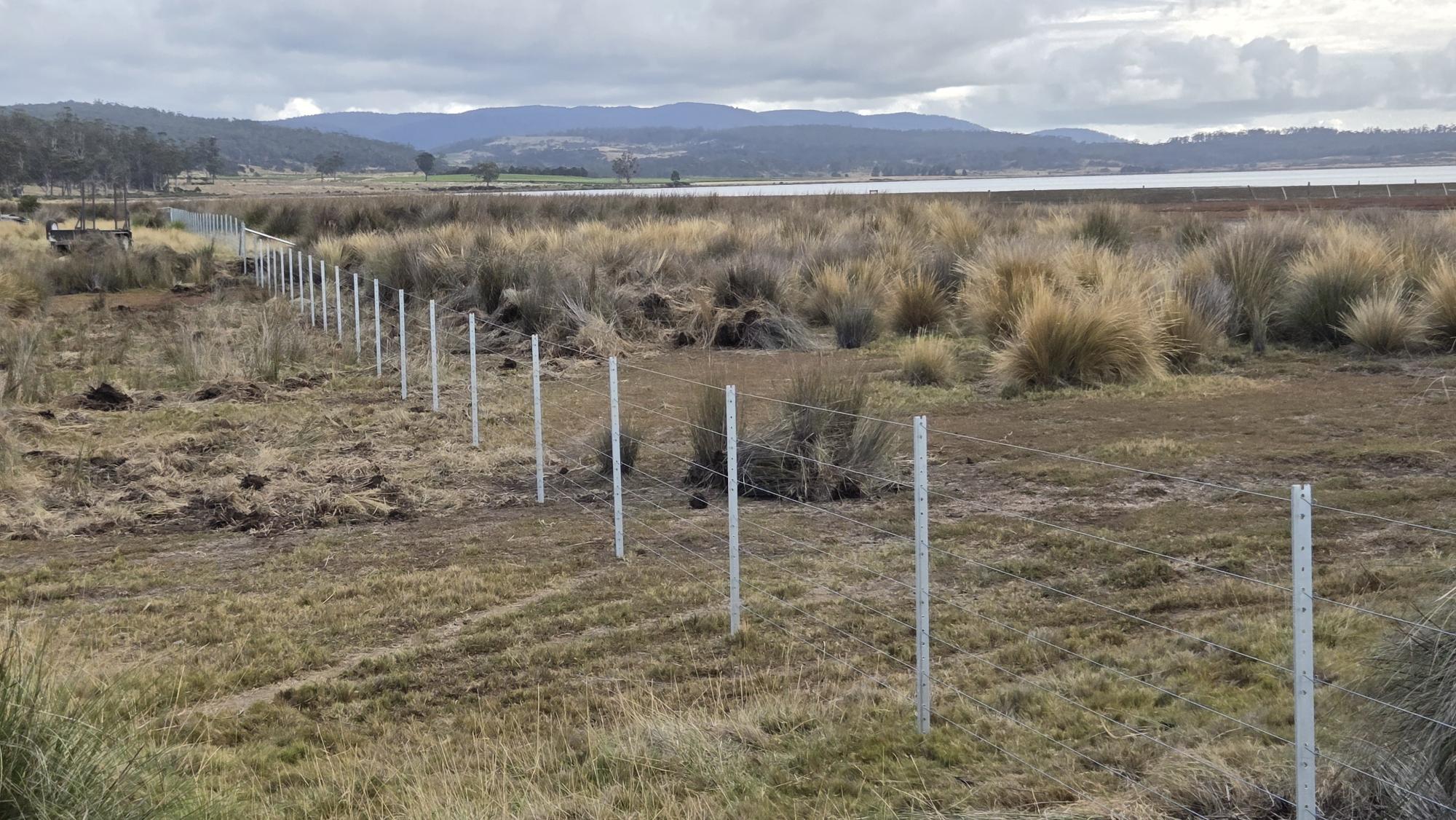
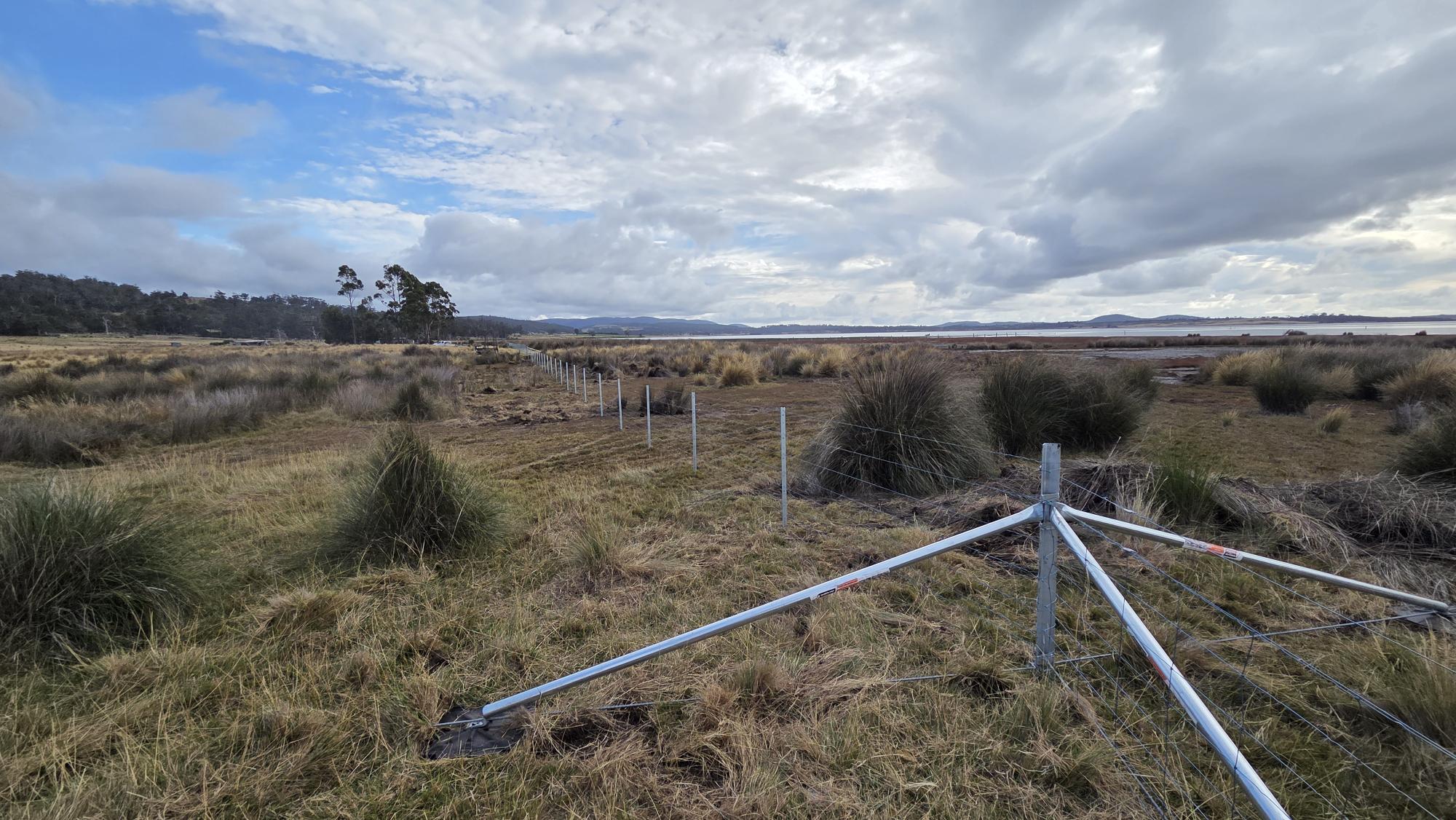
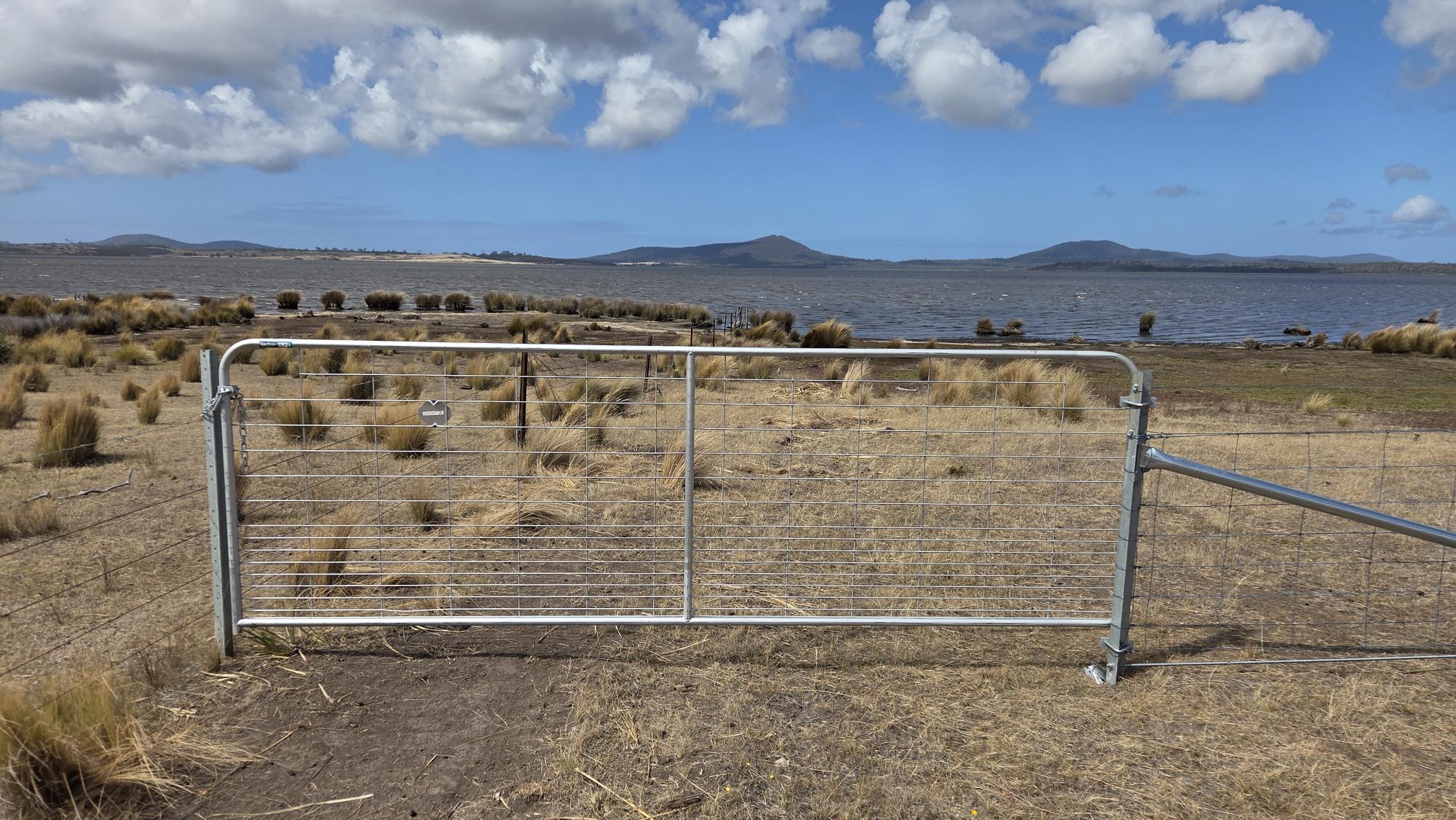
This fencing work was completed at the end of February 2026 and we will continue to work with the landholder to restore the riparian zone, with future potential for weeding and revegetation work.
This project is funded by the Australian Government’s Natural Heritage trust and delivered by NRM South, a member of the Commonwealth Regional Delivery Partners panel.