
-MEDIA RELEASE-
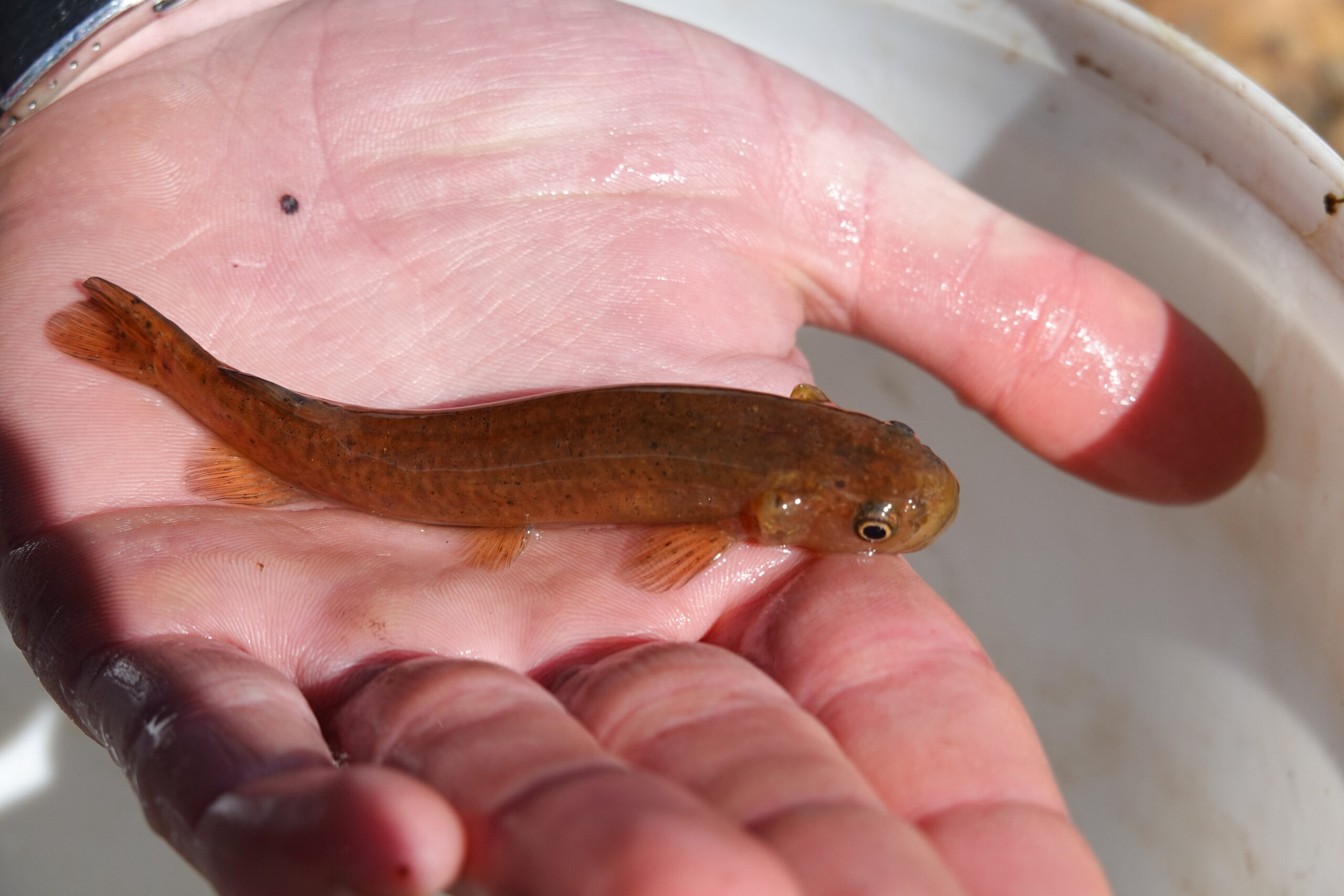
The future of one of Australia’s most threatened freshwater fish is looking brighter, with evidence confirming that recently translocated populations of endangered Swan galaxias are now successfully breeding in their new carefully selected habitats.
The milestone marks a significant achievement for NRM South and project partners, following several years of conservation action aimed at protecting the species from ongoing decline.
Endemic to Tasmania, Swan galaxias (Galaxias fontanus) are found only in a handful of fragmented locations in eastern Tasmania. They are at risk from threats including invasive predatory fish such as trout and redfin perch, as well as increasing pressure from drought, flooding and climate change.
As part of NRM South’s Swan galaxias recovery efforts, 120 fish from four separate populations were translocated into carefully selected refuge sites in 2023. The translocations were undertaken in partnership with Tasmania’s Inland Fisheries Service (IFS), CSIRO and the University of Tasmania, with sites chosen for their suitability, climate resilience and absence of invasive predators.
Recent follow up monitoring has now confirmed that these new populations are not only surviving but reproducing – an encouraging sign that the translocations have been successful in establishing viable long-term insurance populations for the species.
NRM South CEO Nepelle Crane noted that this outcome represents a major step forward in securing the future of one of Tasmania’s rarest freshwater fish species:
“This is a such a fantastic result, and a welcome piece of positive news for Tasmania’s threatened species. This project has demonstrated the importance of targeted conservation action and the real difference it can make to protecting our most at-risk populations.’
IFS fisheries scientist, Rob Freeman, remarked: “Seeing evidence of successful breeding in these translocated populations is a great sign that these fish are adapting well to their new habitats and that the recovery approach is working. For a species facing such significant threats, establishing self-sustaining populations in safer locations is critical to reducing extinction risk and preserving important genetic diversity for the species.”
The success of this project is thanks to earlier recovery work that included habitat and climate modelling, environmental DNA (eDNA) monitoring, riparian restoration and extensive site assessments to identify suitable translocation locations. Alongside on-ground conservation efforts, the project also conducted feasibility studies into captive breeding, working with IFS and the Arthur Rylah Institute to develop a captive management plan for the species, as well a developing biosecurity messages targeted at the Tasmanian Angling Community to raise awareness about the impacts of introducing predatory fish species into waterways inhabited by Swan galaxias.
Inland Fisheries Director Ryan Wilkinson said he was ‘extremely pleased with the high level of collaboration between project partners, which has delivered some positive and meaningful conservation outcomes for the species’
The project, funded through the Australian Government’s Saving Native Species program, has now wrapped up and has made significant strides towards the long-term recovery of the species.
Federal Minister for the Environment, Murray Watt said the Albanese Government was pleased to support the Swan galaxias recovery.
“This is really exciting news, and I congratulate everyone involved who has helped put this rare fish species on a path to recovery,” Minister Watt said.
“Swan galaxias are one of nine fish species prioritised for recovery under the Government’s Threatened Species Action Plan and this work was supported by $443,515 in grant funding from our Saving Native Species program.”
NRM South will continue to look for opportunities to collaborate further on future conservation initiatives.
“Protecting threatened species such as the Swan galaxias requires long-term collaboration, science-led management and community support,” Nepelle added. “The success of this project is also thanks to the work of our project partners, the Inland Fisheries Service, CSIRO, the University of Tasmania and supporting landholders.”
For more information about NRM South’s Swan galaxias conservation work, visit the project page.
-ENDS-