
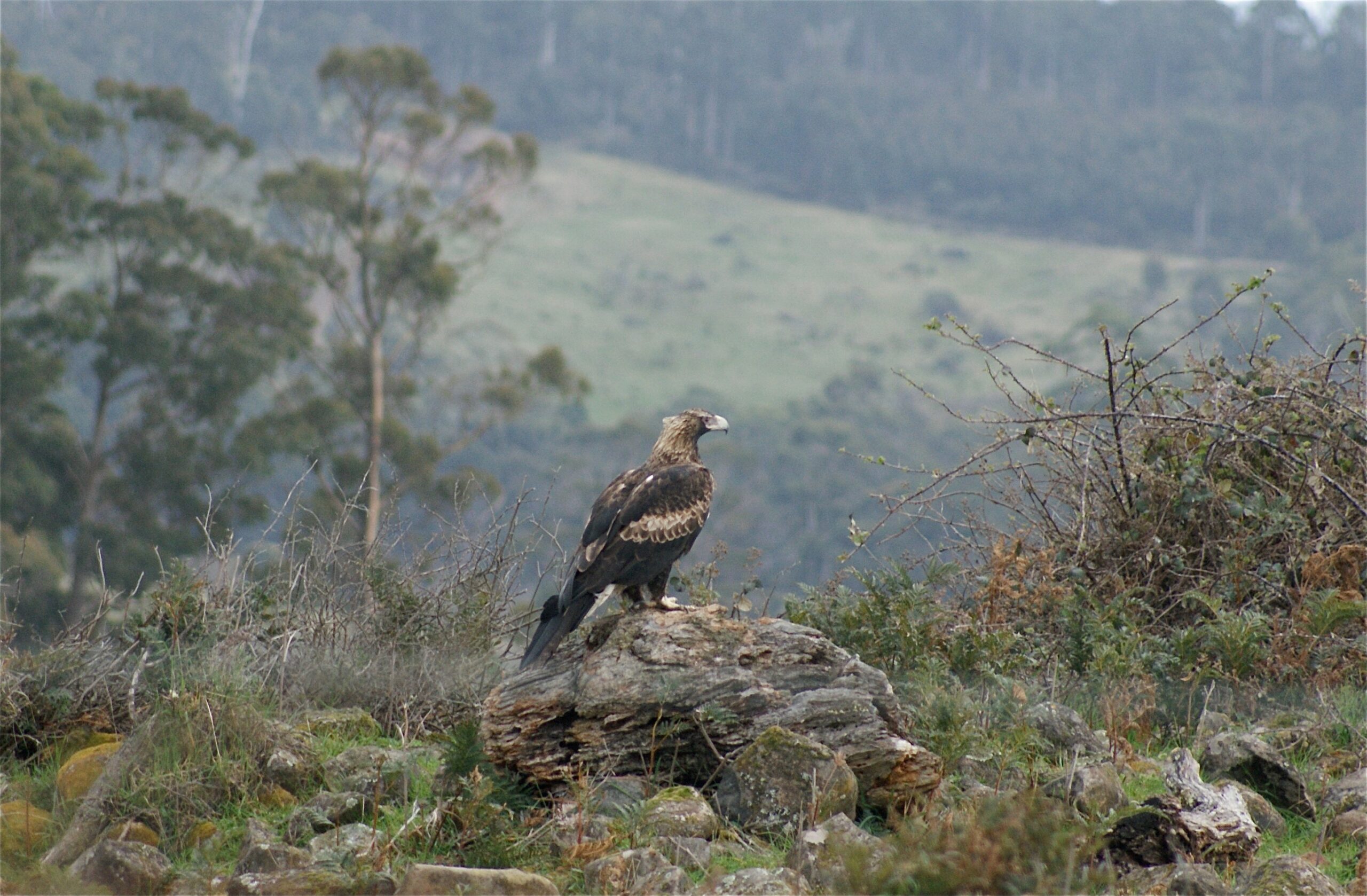
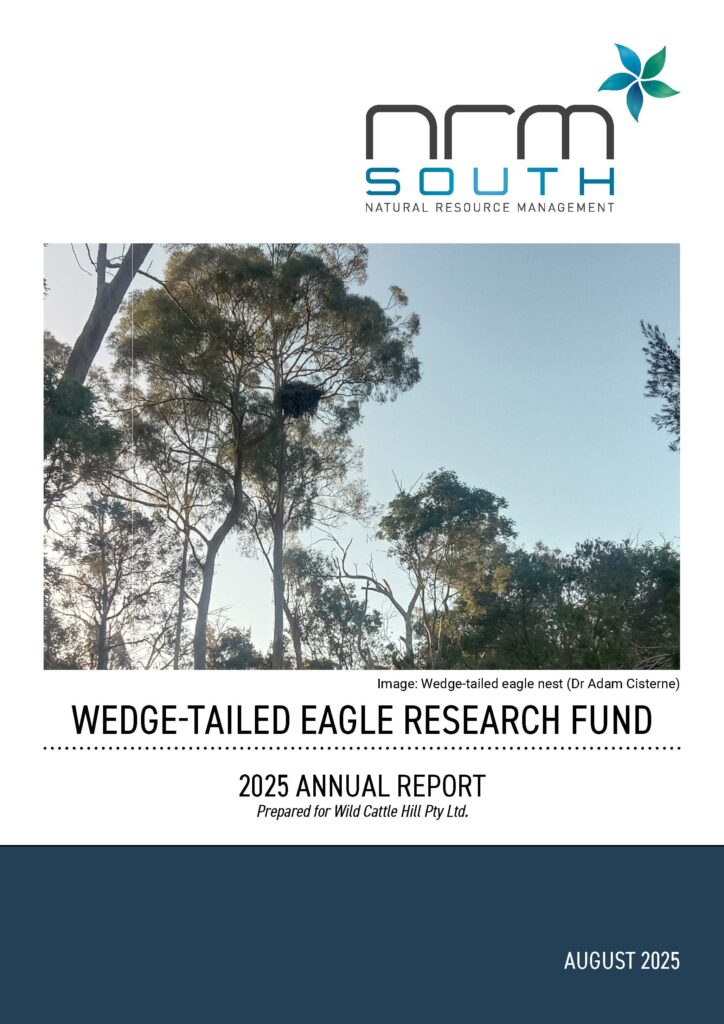
Wedge-tailed Eagle Research Fund
Tasmania’s Wedge-tailed Eagle is classified as a separate sub-species to Australia’s mainland population and listed as Endangered. Threats to Wedge-tailed Eagles include loss of habitat and mortalities from interacting with the human world.
There is a lot that is still not understood about Tasmania’s Wedge-tailed Eagles in Tasmania. NRM South is working to address some of these knowledge gaps through the Wedge-Tailed Eagle Research Fund for Cattle Hill Wind Farm. This fund is supporting high quality ecological or other relevant scientific research on Tasmania’s Wedge-tailed Eagles, the results of which will assist with their management and protection.
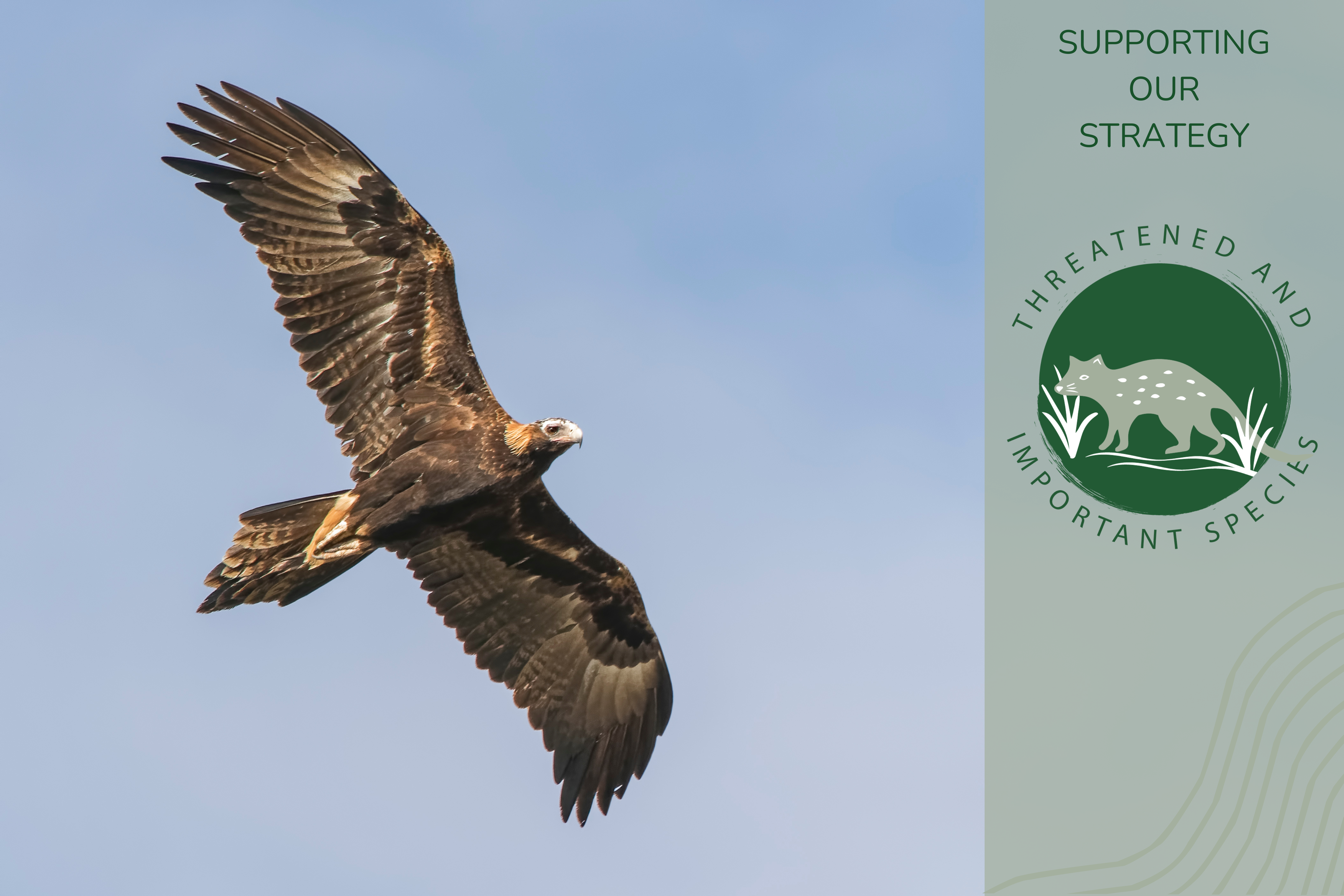
STRATEGY PRIORITY BS6: Tasmanian wedge-tailed eagle
Through this project, we contributing to improved management outcomes for the Tasmanian Wedge-tailed Eagle.
What we are doing:
In partnership with government and the industry sector, we are managing an Eagle Fund to support researchers in better understanding the ecology and behaviour of Wedge-tailed Eagles, as well as the potential impacts of human-caused threats to the population.
Our Approach
This project is helping to protect Tasmania’s Wedge-tailed Eagle population by;
- Administering the Wedge-tailed Eagle Research Fund to support high quality ecological or other relevant scientific research on Tasmanian Wedge-tailed Eagles, the results of which will assist with their management and protection.
- Coordinating the establishment of an independent Technical Advisory Committee to oversee the Fund.
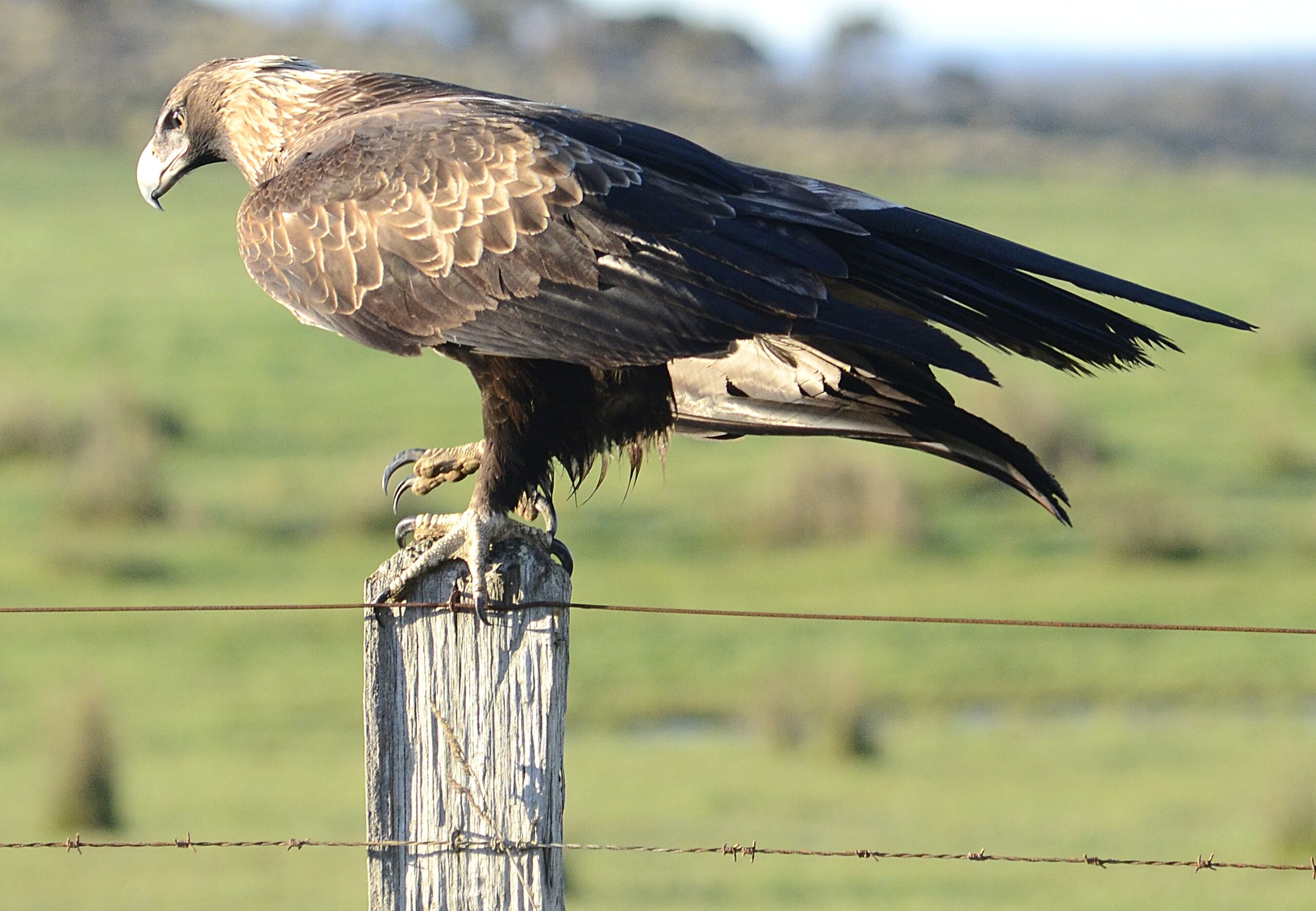
PROJECT PILLARS WEDGE-TAILED EAGLE
Background
Despite sharing the same name, Tasmania’s Wedge-tailed Eagle (Aquila audax fleayi) is considered to be a separate sub-species to Australia’s mainland population. While their situation is relatively secure in mainland Australia, the state of Tasmania’s population is more precarious. Listed as Endangered under both the Tasmanian Threatened Species Protection Act 1995 and the Commonwealth Environment Protection and Biodiversity Conservation Act 1999, current population estimates are around 1,000 adult birds.
Threats to Wedge-tailed Eagles include loss of habitat (particularly nesting habitat) and mortalities from interacting with the human world – including their active removal by shooting, trapping or poisoning; collisions with powerlines, vehicles, fences and wind turbines; electrocution on powerlines; secondary poisoning from lead and rodenticides, entanglement and pollution.
There is a lot that is still not understood about Tasmania’s Wedge-tailed Eagles in Tasmania, and NRM South is addressing some of these knowledge gaps via the Wedge-Tailed Eagle (WTE) Offset Fund for Cattle Hill Wind Farm. This fund is supporting high quality ecological or other relevant scientific research on Tasmania’s Wedge-tailed Eagles, the results of which will assist with the management and protection of the sub-species.
This Research Fund was established as an offset requirement for the Cattle Hill Wind Farm, formerly owned by the Power China Group/ Goldwind Group and now owned by Atmos Renewables (as of 2025).
Research Projects
Projects funded and now complete:
- 2020: Investigating the spatial ecology and habitat use of the Tasmanian wedge-tailed eagle in unmodified landscapes using high-frequency GPS telemetry (Cameron, Pay, Katzner, Koch, Wiersma).
- 2021: Estimating the population size of the Tasmanian wedge-tailed eagle (Aquila audax fleayi) using modern genetic techniques (Stojanovic, Cistern, Pay, Burridge, Young, Clarke and Butler).
- 2021: Monitoring wedge-tailed eagle population trends (Hawkins and Potts). Analysis of the Where Where Wedgie data
- 2022: Investigating the spatial ecology and habitat use of Tasmanian wedge-tailed eagles in the Tasmanian Midlands using high-frequency GPS telemetry (Pay, Koch, Cameron, Wiersma, Katzner)
- 2023: Comprehensive analysis of the ecotoxin threat to Tasmanian Wedge-tailed Eagles (Aquila audax fleayi) (Stojanovic)
- 2025: Characterising the demographic history and evolutionary trajectory of Tasmanian wedge-tailed eagles using whole genomic sequencing (Ahrrens, Miller, Burridge, Weeks).
Projects underway:
- 2024: How is TWTE habitat selection affected by human activities and land-use intensity? PhD stipend University of Tasmania (Pay et al).
- 2025: Making the surveys count: an innovative approach to convert relative abundance data to a population estimate for the Tasmanian wedge-tailed eagle, through direct measurement of detectability (Pay, Johnson, Zhang, Hawkins, Potts). Underway.
As of end 2025, a total of $614,337 has been awarded for Tas WTE research by the Fund.
Independent Technical Advisory Committee
An independent Technical Advisory Committee has been appointed to oversee the Fund. They will decide which projects are supported by the Fund and monitor progress of the projects that have been supported. This committee is comprised of the following members:
- Dr Sarah Munks (independent member)
- Dr Phil Bell (independent member)
- Dr Ivan Lawler (Department of Agriculture, Water and Environment)
- Dr Davina Gregory-Dunsmuir (NRE Tas)
- Dr Cindy Hull, Chair (NRM South)
Achievements to Date
- Produce an Annual report and provide 6 monthly updates to the funding body.
- Provide a grant round each year, the next is expected during 2026.
As of early 2025, a total of $614,337 has been awarded for Tas WTE research by the Fund.
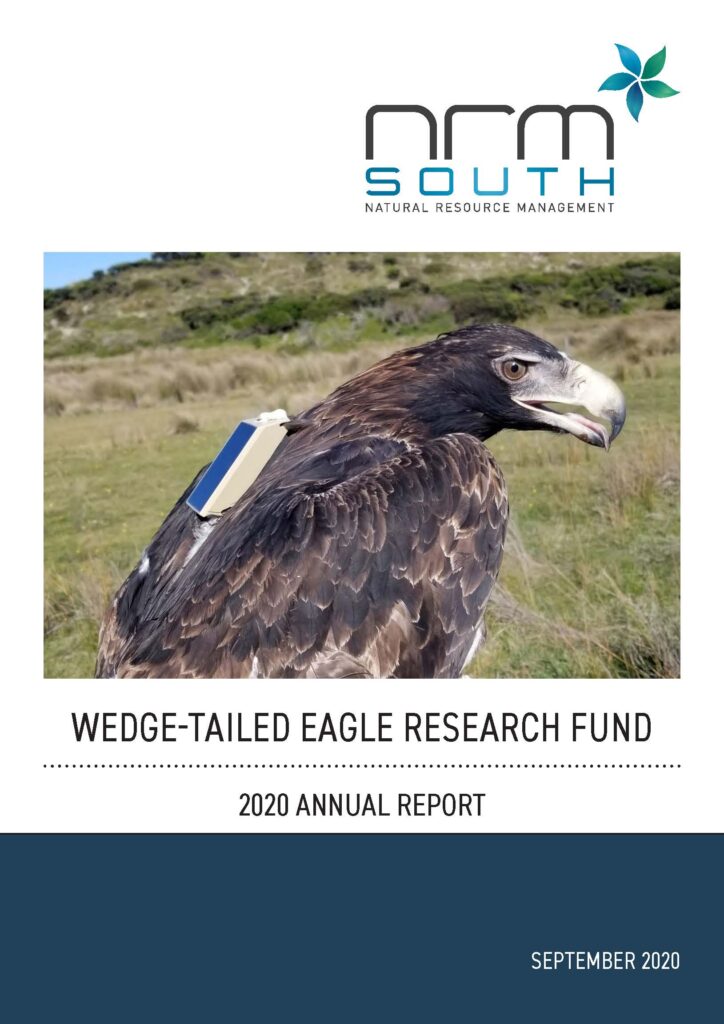
Annual Reports
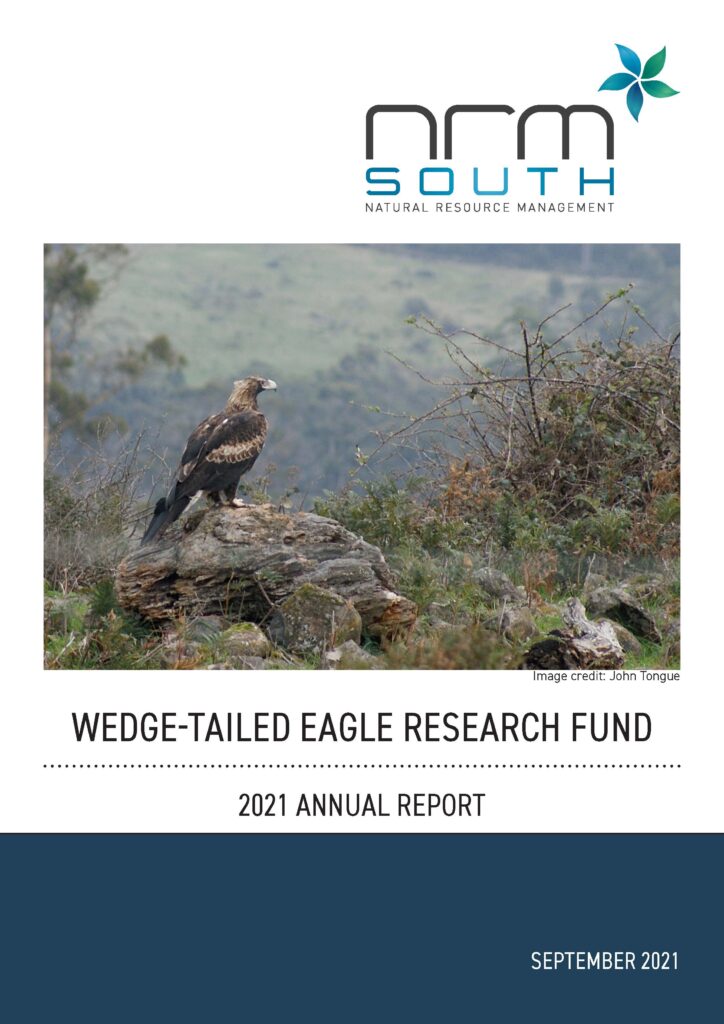
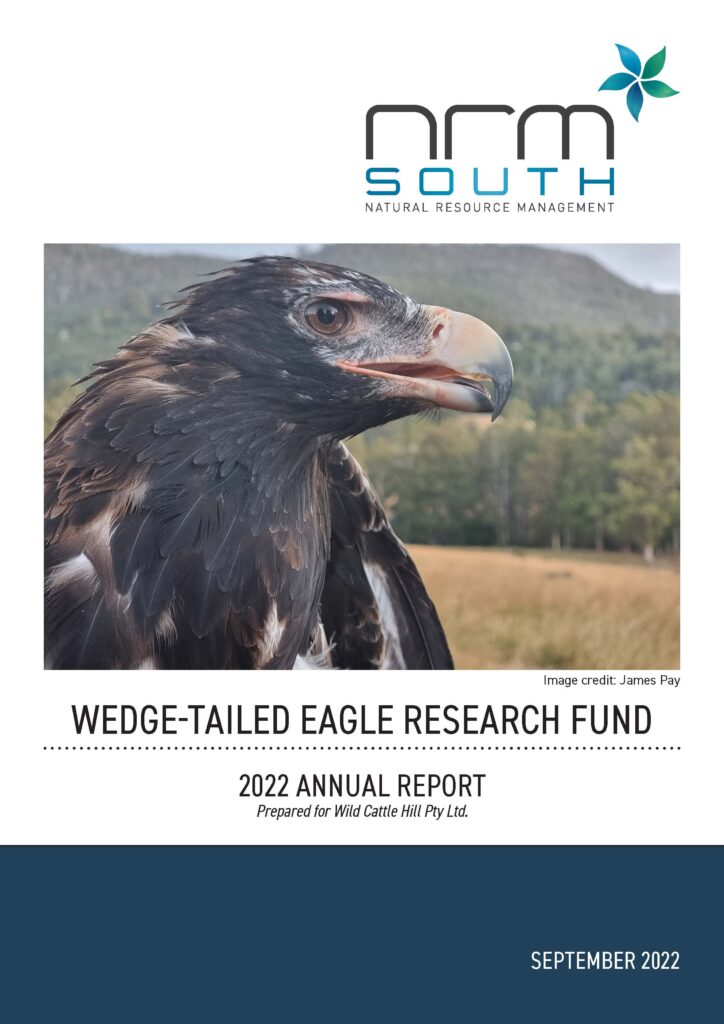
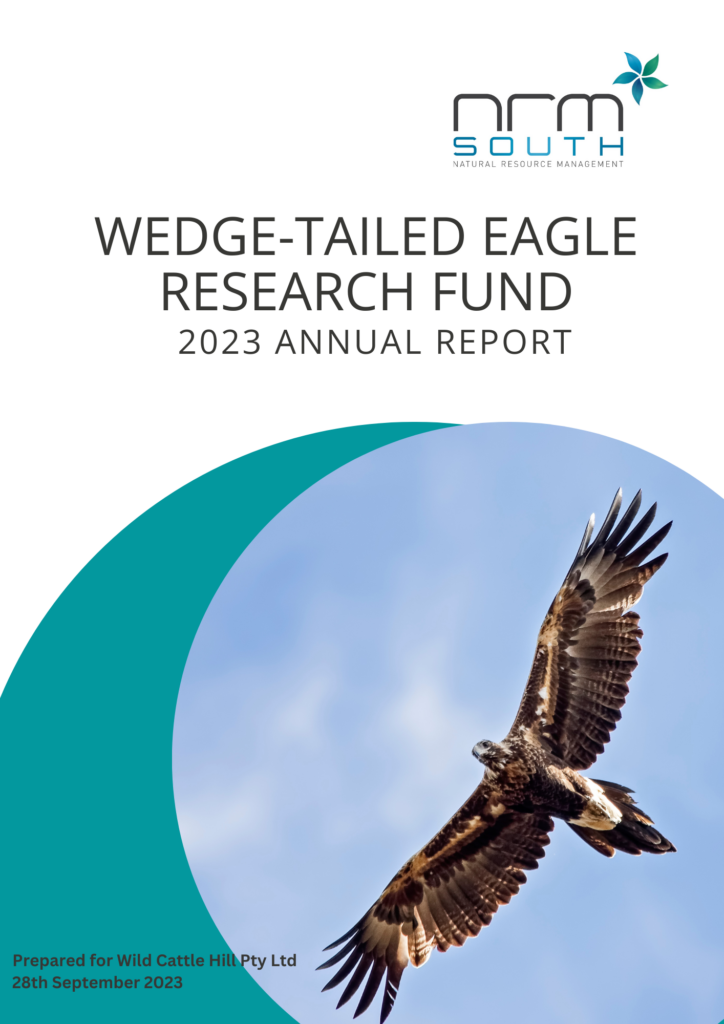
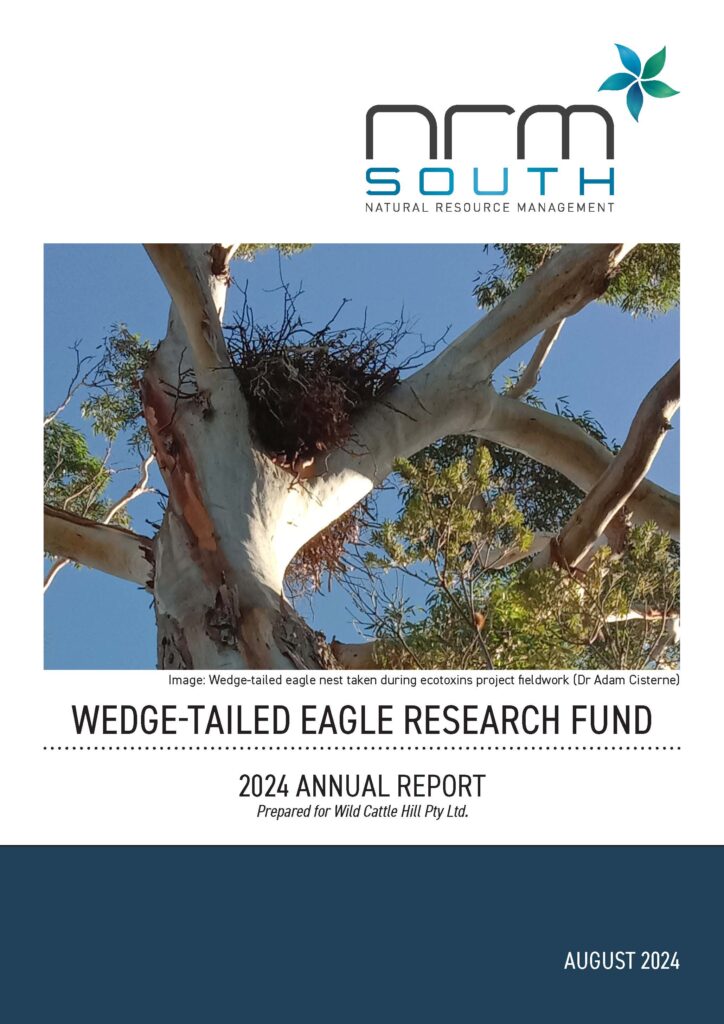
-
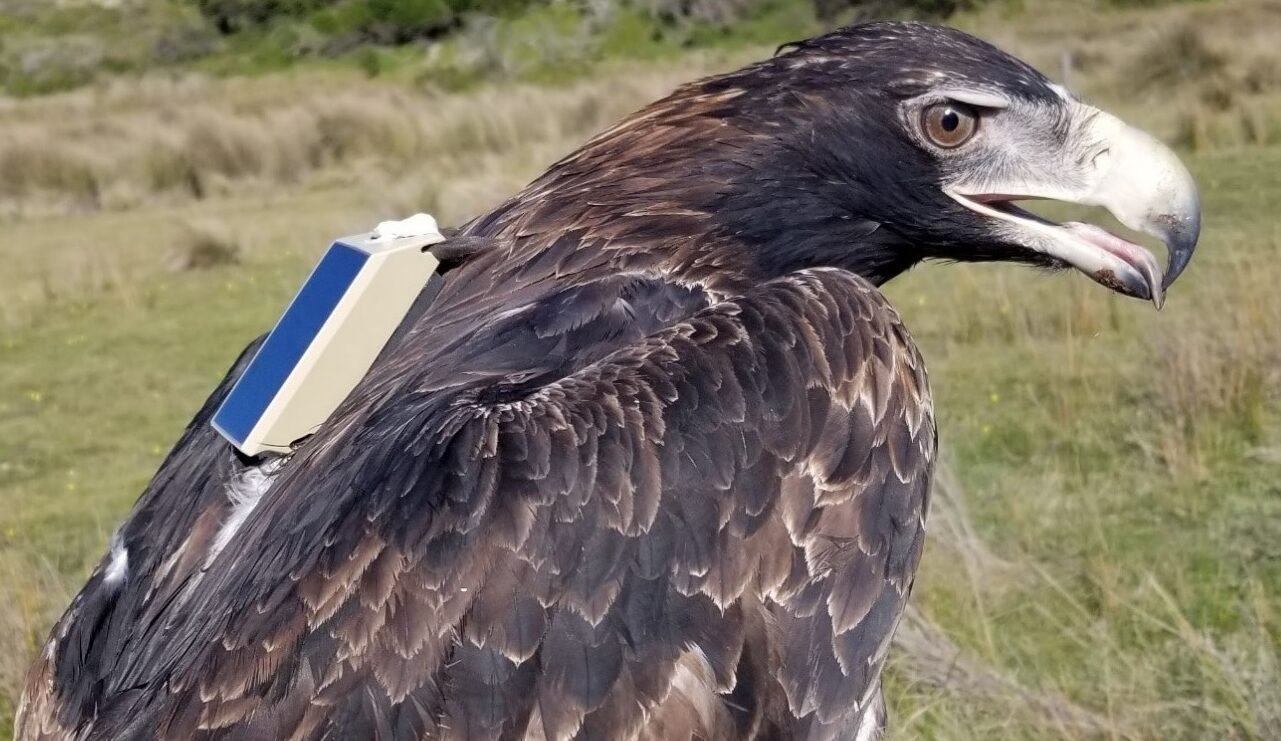
Image credit Dr James Pay, as part of a project funded by Woolnorth Renewables.
-
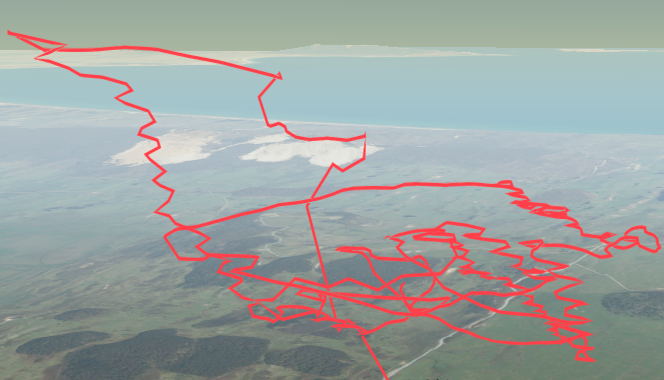
Image credit Dr James Pay, as part of a project funded by Woolnorth Renewables.
-
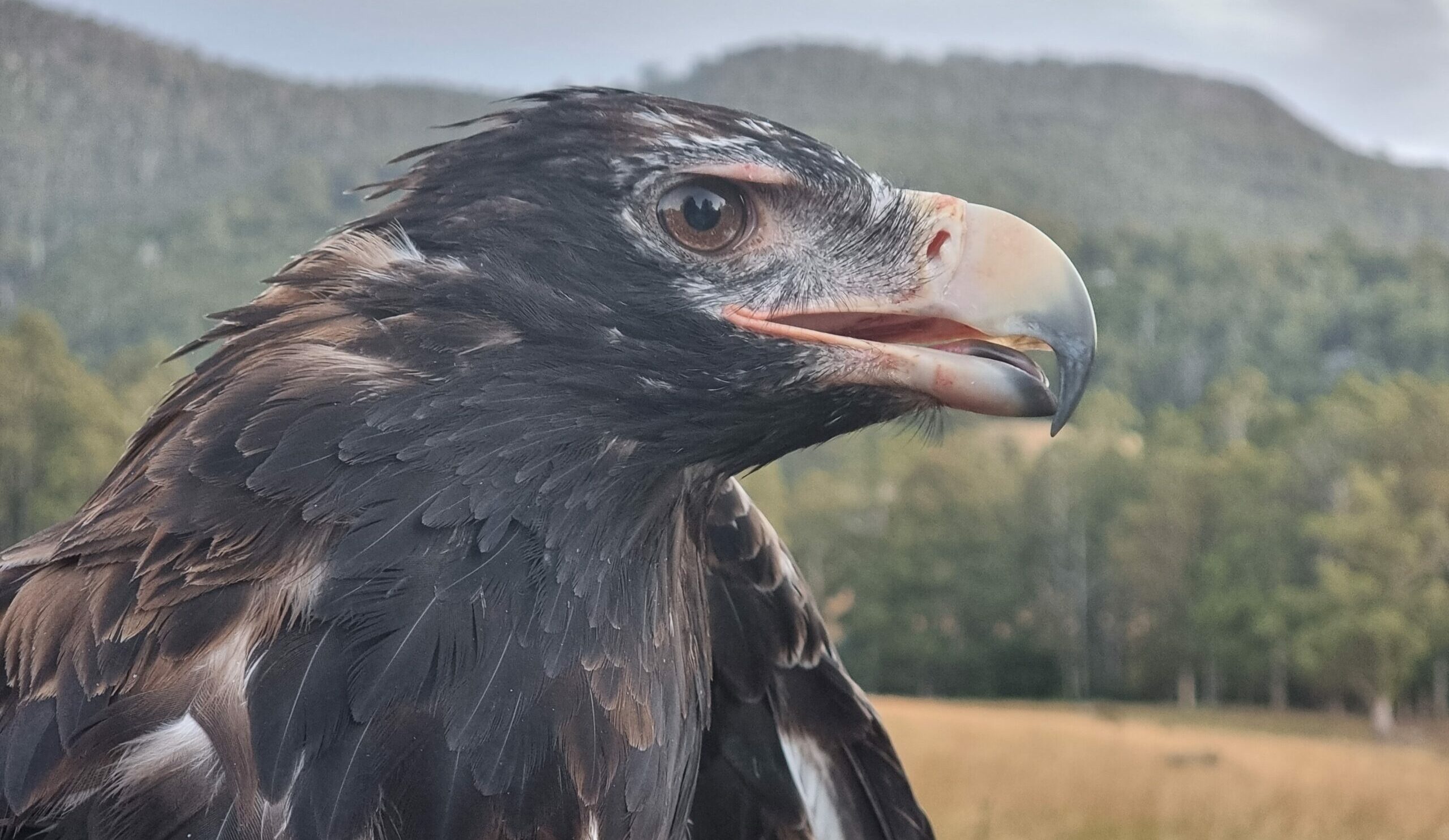
Image credit: Dr James Pay.
Key Milestones

Contract signed with Wild Cattle Hill Pty Ltd to administer the fund

Technical Advisory Committee (TAC) established March 2020

First grant awarded in 2020
6 projects on Tasmanian WTE have been supported

This project is in line with the United Nations Sustainable Development Goals
Related News
-
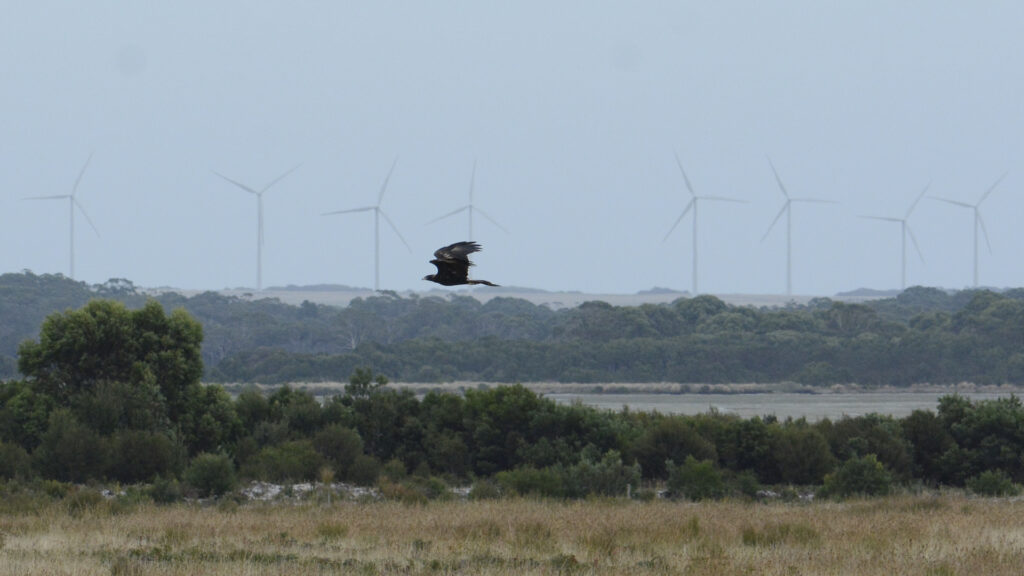
Image credit: Eric Woehler
14 September, 2021 2 Min Read
Funding announced for Wedge-tailed Eagles research
NRM South is pleased to announce this year’s successful recipients for our Wedge-tailed Eagles research grants program. The Wedge-tailed Eagle Research Fund, administered by NRM South, aims to offset potential...
Read More -
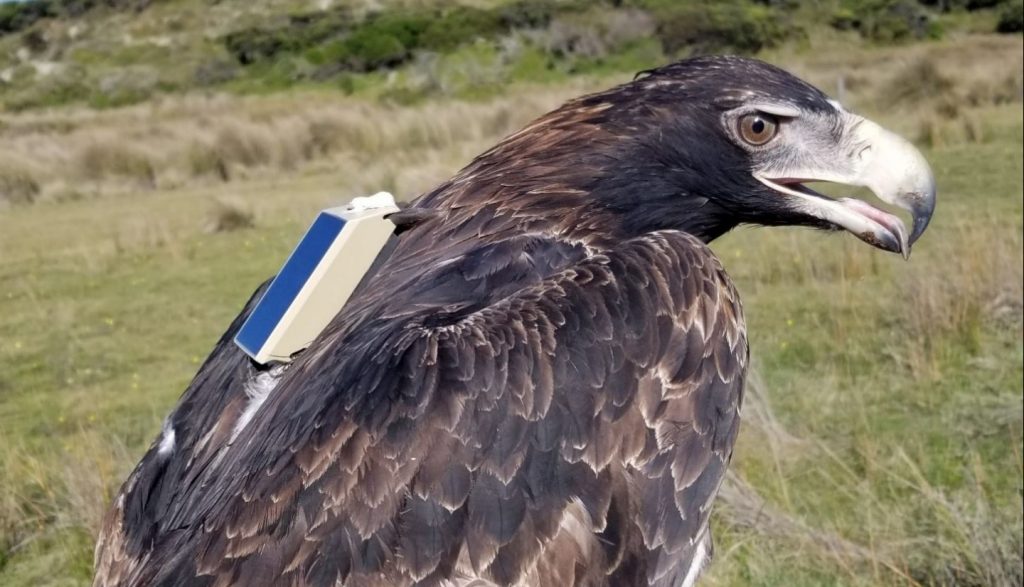
Image credit: Dr James Pay
14 September, 2020 2 Min Read
Flying wild – what do wedgies get up to in the wilderness?
Most of what we know about the habitat requirements for Tasmania’s Wedge-tailed Eagle comes from research done at nesting sites and in human-modified landscapes. However, the first research project approved...
Read More