
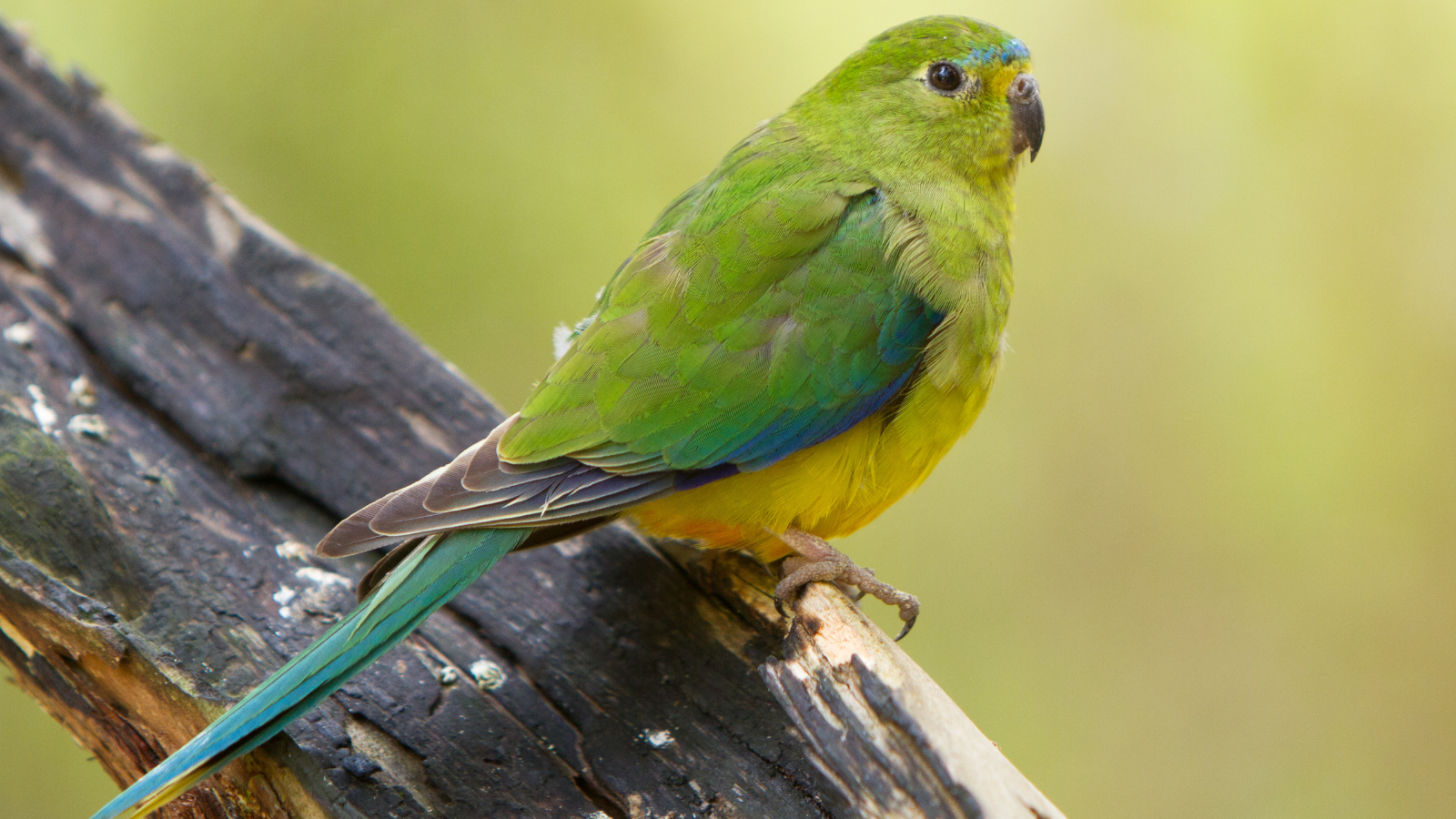
Over the past year, we have continued our work with project partners on actions to support the recovery of the critically endangered Orange-bellied Parrot (OBP), by identifying and addressing threats both at their breeding grounds and along their migration route. One of Australia’s most at-risk birds, OBPs breed only at Melaleuca in south-west Tasmania, and migrate to southern Victoria and south-eastern South Australia in winter.
Population Modelling – How many deaths are too many?
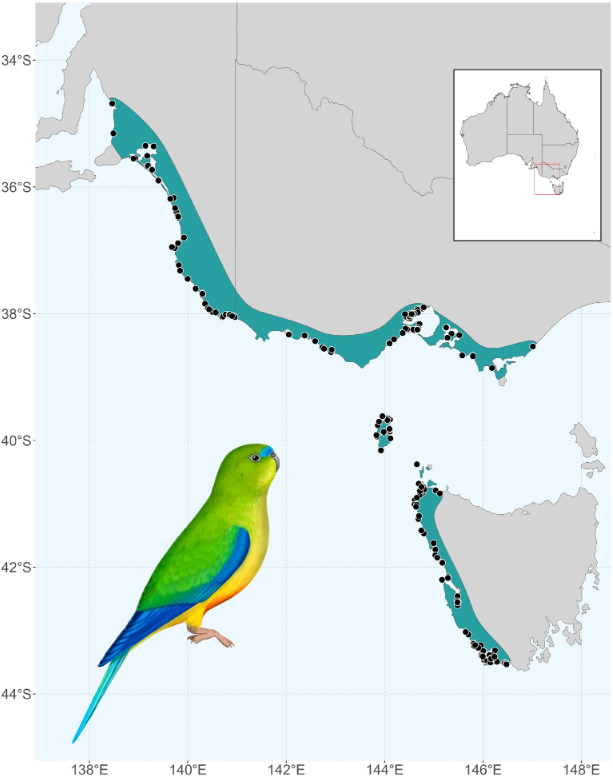
Recent population modelling from The Australian National University highlights how fine balance of recovery efforts. Researchers looked at four future management scenarios to understand how any increased mortalities could impact the population trajectory.
This is a particularly pertinent question with a continuing increase in infrastructure investment along the parrots’ migratory route (such as windfarms). The modelling showed that captive-bred birds, released at Melaleuca each year, are currently sustaining the wild population and that even a small increase in annual deaths could shift the population from growth back into decline. This reinforces the importance of sustained funding to protect the species, allowing for the essential work in reducing threats across their breeding grounds, migration route and feeding habitats to continue.
Habitat improvement along the migration route
Research over the last few years suggests that conservation actions within the OBPs breeding range alone are unlikely to reverse their decline, and that complementary conservation actions along both their migration route and in their mainland wintering grounds are essential. The National Recovery Plan for OBPs lists habitat loss and degradation as a key threating process and can be the result of inappropriate hydrological/grazing/fire regimes, invasive weeds and human disturbance. All these actions have the potential to impact the extent and quality of foraging habitat throughout the migration range of OPBs.
Project partners, the Orange-bellied Parrot Tasmanian Program within the Department of Natural Resources and Environment Tasmania (NRE Tas), have been mapping potential feeding habitat along Tasmania’s West Coast and offshore islands. This mapping has provided insights into the extent and quality of OBP foraging habitat which can now be used to inform identify potential management options for on-ground recovery efforts (e.g. weeding and habitat restoration programs).
At Preminghana on Tasmania’s north-west coast, the Tasmanian Aboriginal Council has already made a start on some of this work. Rangers have been removing gorse infestations to improve potential feeding sites along their migration path. To date, upward of 20ha of gorse has been treated. The work combines cultural burning with spraying and mulching to restore native habitat values for the benefit of OBPs as well as several other locally threatened plants and animals.
Monitoring and research at Melaleuca
Food and Fire
ire is an important part of the Australian landscape and understanding how fire drives vegetation community composition and structure is an important part of conservation. At Melaleuca, the preferred foraging habitat for OBPs is buttongrass moorlands – which are highly flammable. Research indicates that the OBP’s preferred food plants are most abundant at around 8 years after a burn. However, the fire regimes have changed significantly since the arrival of Europeans and cessation of Aboriginal burning regimes, which has had an impact on the abundance of food across the moorlands.
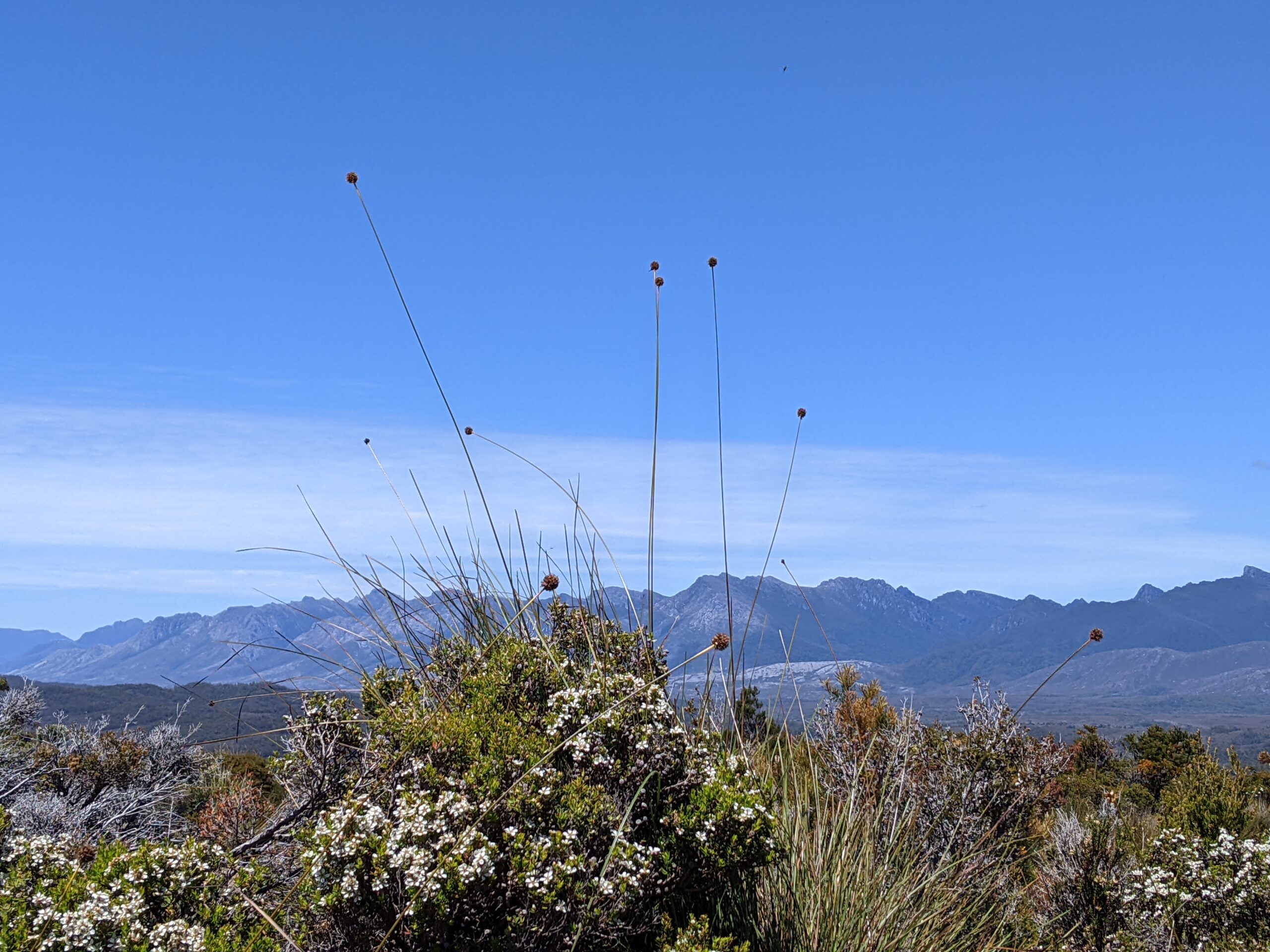
In this project, NRE Tas is investigating how controlled burns carried out by the Tasmania Parks and Wildlife Service impacts OBP food availability. Floristic surveys are being carried out within burn scars near breeding areas close to Melaleuca. Within each 3x3m plot, the abundance of seven food plants is being recorded (Actinotus bellidioides, Helichrysum pumilum, Actinotus suffocatus, Boronia citriodora, Boronia elisabethiae, Boronia parviflora and Eurychorda complanate), alongside the number of buttongrass (Gymnoschoenus sphaerocephalus) seed heads and the presence or absence of pink swamp-heath (Sprengelia incarnata). These surveys are being repeated annually to build a picture of how these species recover after fire and if the timing of burns (e.g. season), impacts this recovery.
Predators and Competitors
NRE Tas is also carrying out fauna surveys (including spotlight surveys and camera trapping at nest boxes) to better understand predator and competitor threats, and how these might be managed. The surveys target potential predators such as Kreft’s Glider (previously known as sugar glider), which are not currently known to occur at Melaleuca but could potentially move in from surrounding regions. It is also important to monitor potential competitors such as tree martins, green rosellas and starlings which may force OBPs out of nest boxes. Survey results will be used to update the current predator and competitor management plan.
What’s at stake
It is estimated that at the end of the 2025/26 breeding season, 165 birds left the Tasmanian breeding grounds on their northward migration, but we will need to wait until the 2026 census has been completed after the birds return this spring to get a true count of their current population.
These numbers are a significant improvement since the low point of 17 birds returning to Tasmanian breeding grounds in 2016, but their journey to recovery remains uncertain. The population remains extremely vulnerable because of its small population size, migration risks and reliance on ongoing conservation management at the breeding grounds in Melaleuca. The recent confirmation of the H5N1 avian influenza in Australia may also place further pressure on this critically endangered parrot.
Protecting feeding habitat, improving knowledge of migration pathways, maintaining safe breeding conditions and managing predators are all essential to giving released and wild-born birds the best chance of surviving migration and returning to breed.
What’s next
This project runs for another two years, and planned upcoming actions include;
- Continuing with habitat restoration and weed control at key feeding sites.
- Using mapping and field surveys to refine priority areas along the migration route.
- Monitoring the outcomes of ecological burns on food plant species at Melaleuca and adapting management as needed.
- Continued predator and competitor surveys around nest boxes and breeding habitat.
- Sharing project findings with partners and the community to support coordinated recovery action.
This project is funded by the Australian Government’s Natural Heritage Trust and delivered by NRM South, a member of the Regional Delivery Partners panel.