
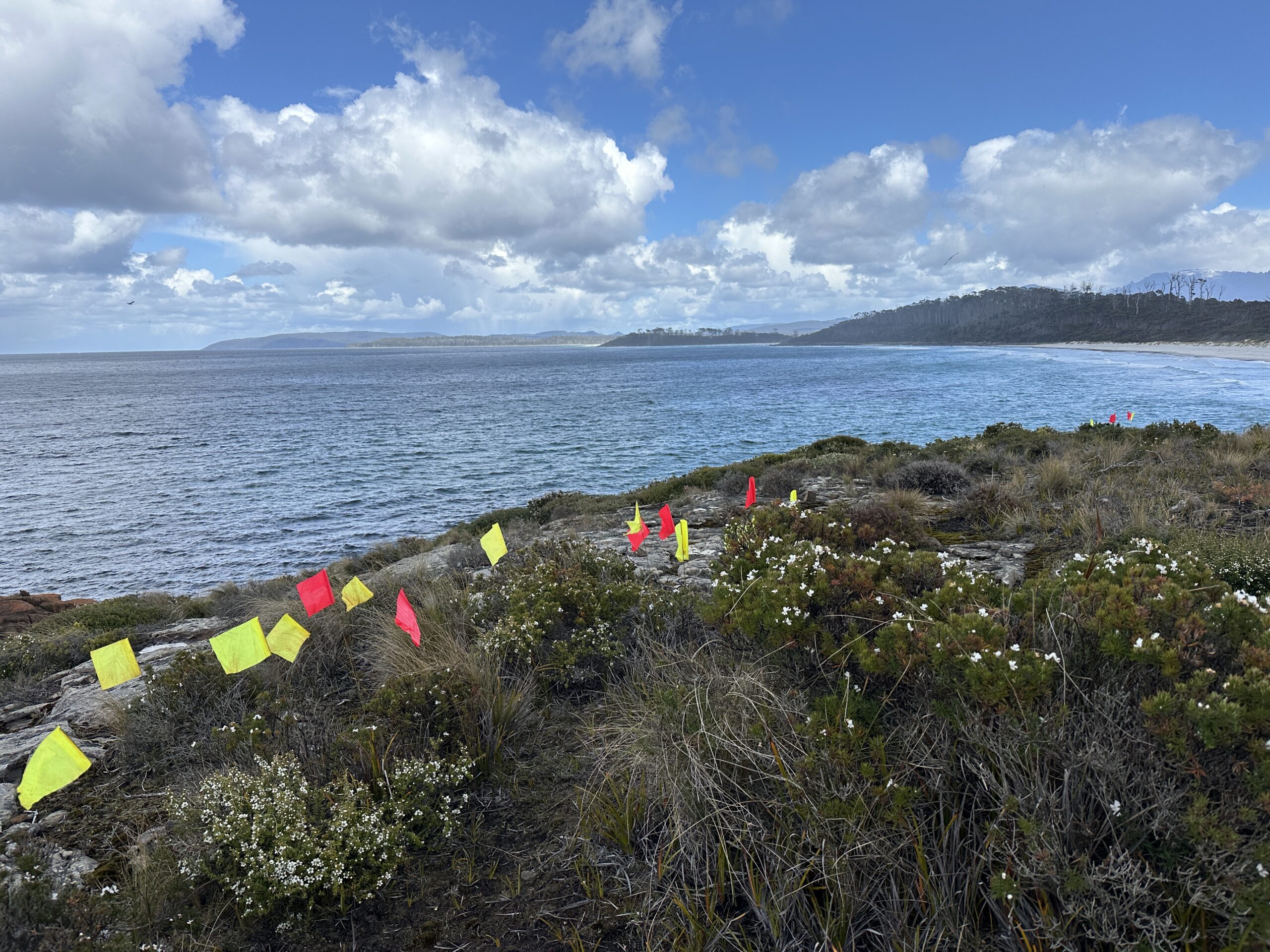
Tucked among the windswept coastal vegetation of Tasmania’s far south grows one of the state’s rarest plants. Southport heath (Epacris stuartii) is a critically endangered shrub found naturally in just one location on Southport Bluff, with a small insurance population established on nearby Southport Island.
Despite being tough enough to withstand the wild weather of the southern seas, it’s a plant facing significant threats. Invasive weeds, disease, browsing animals and fire all place pressure on a species already confined to an extremely limited range.
Across a range of on-ground actions, NRM South has worked with project partners to improve the species’ chances of survival. Building on these conservation efforts, a project was launched in 2025 – funded through the Tasmanian Government’s Threatened Species Partnership Program, with a focus on tackling invasive weeds, monitoring for disease, and strengthening community capacity to support the species into the future.
A major focus was the control of mirror bush (Coprosma repens), a vigorous, fast-growing shrub capable of outcompeting Southport heath for light, nutrients and space – particularly where the population is already under stress from other environmental factors. Professional weed control was carried out on Southport Island in July 2025, helping to reduce competition around the remaining populations and prevent further spread of the weed.
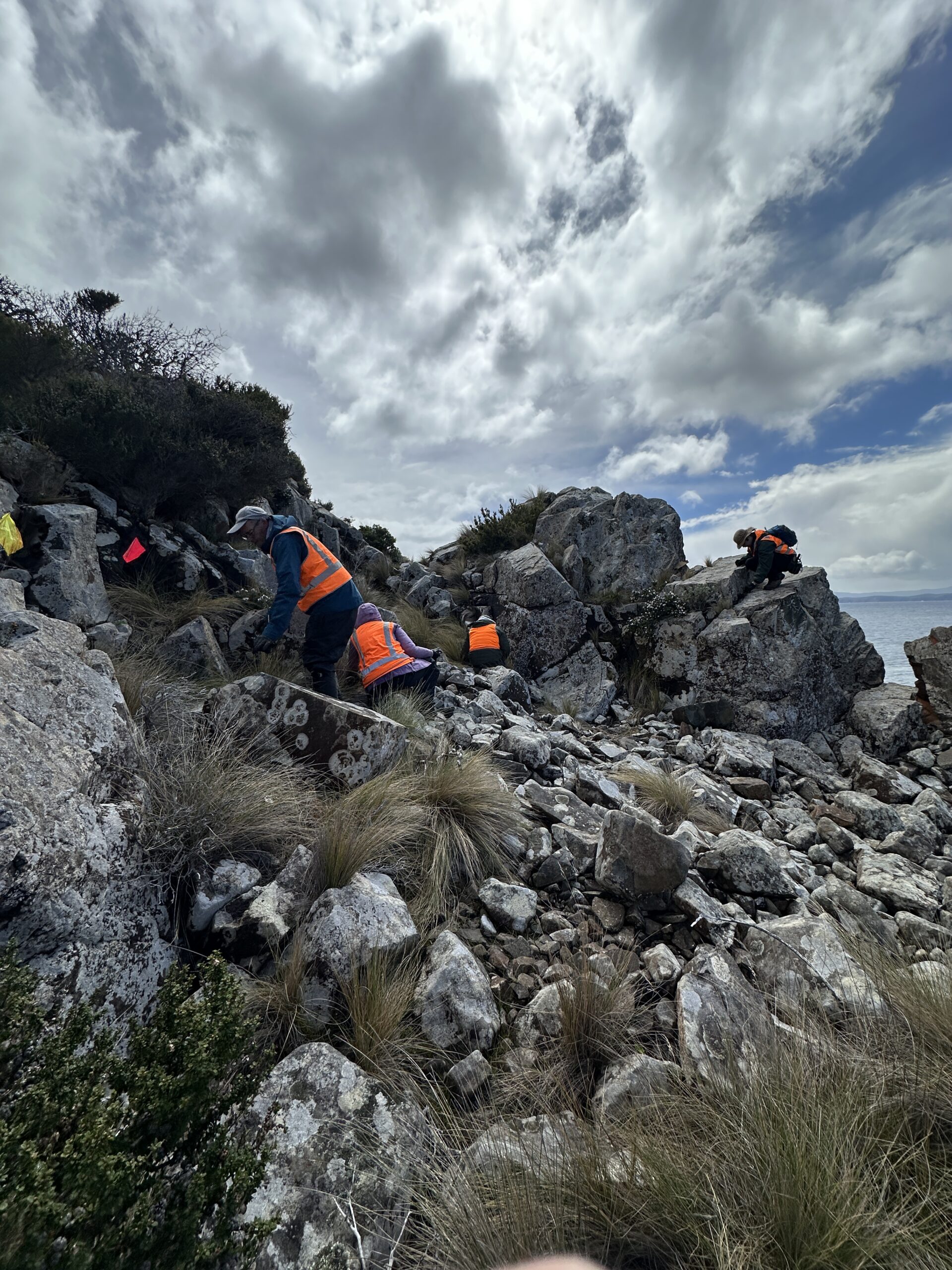
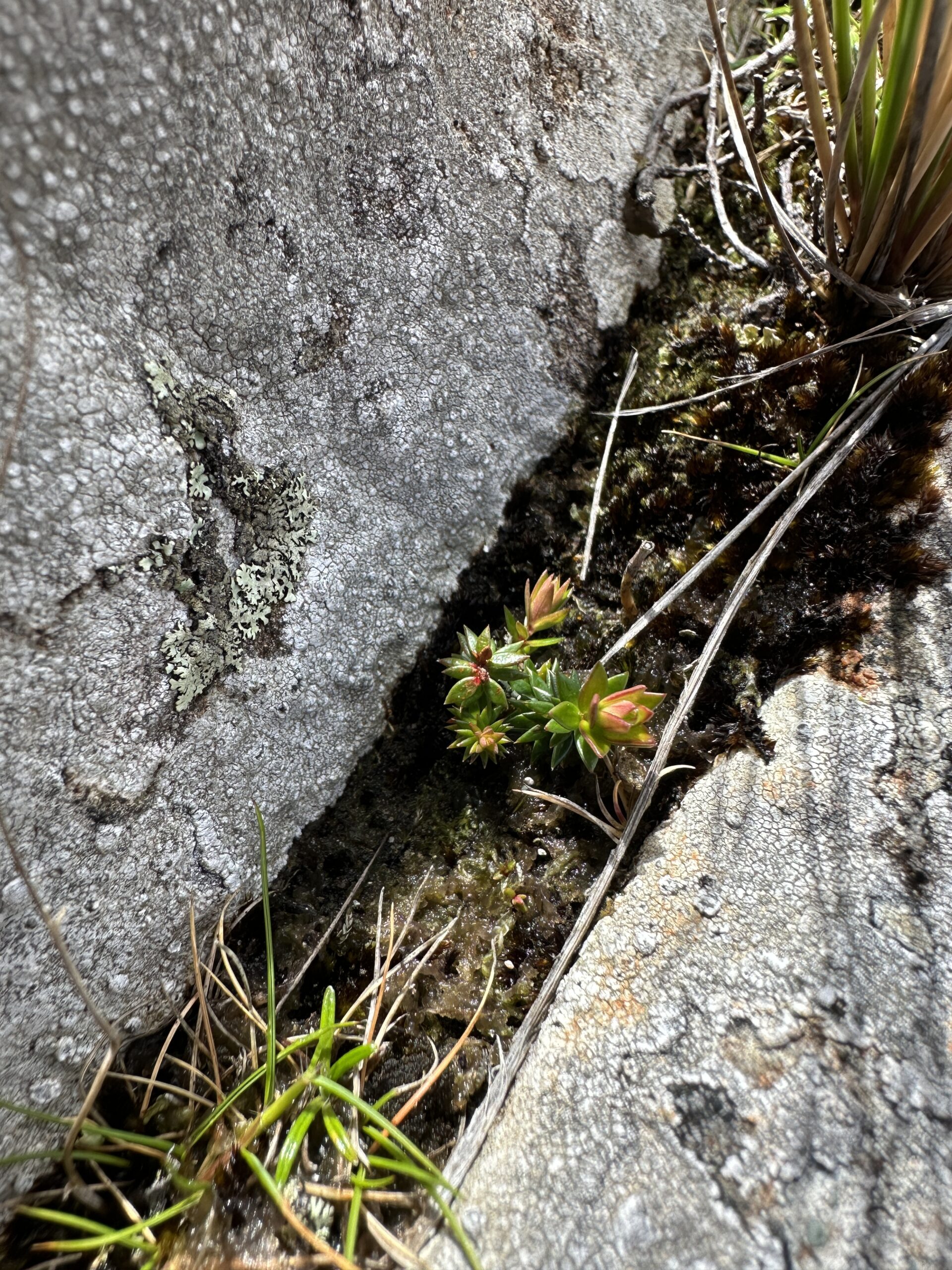
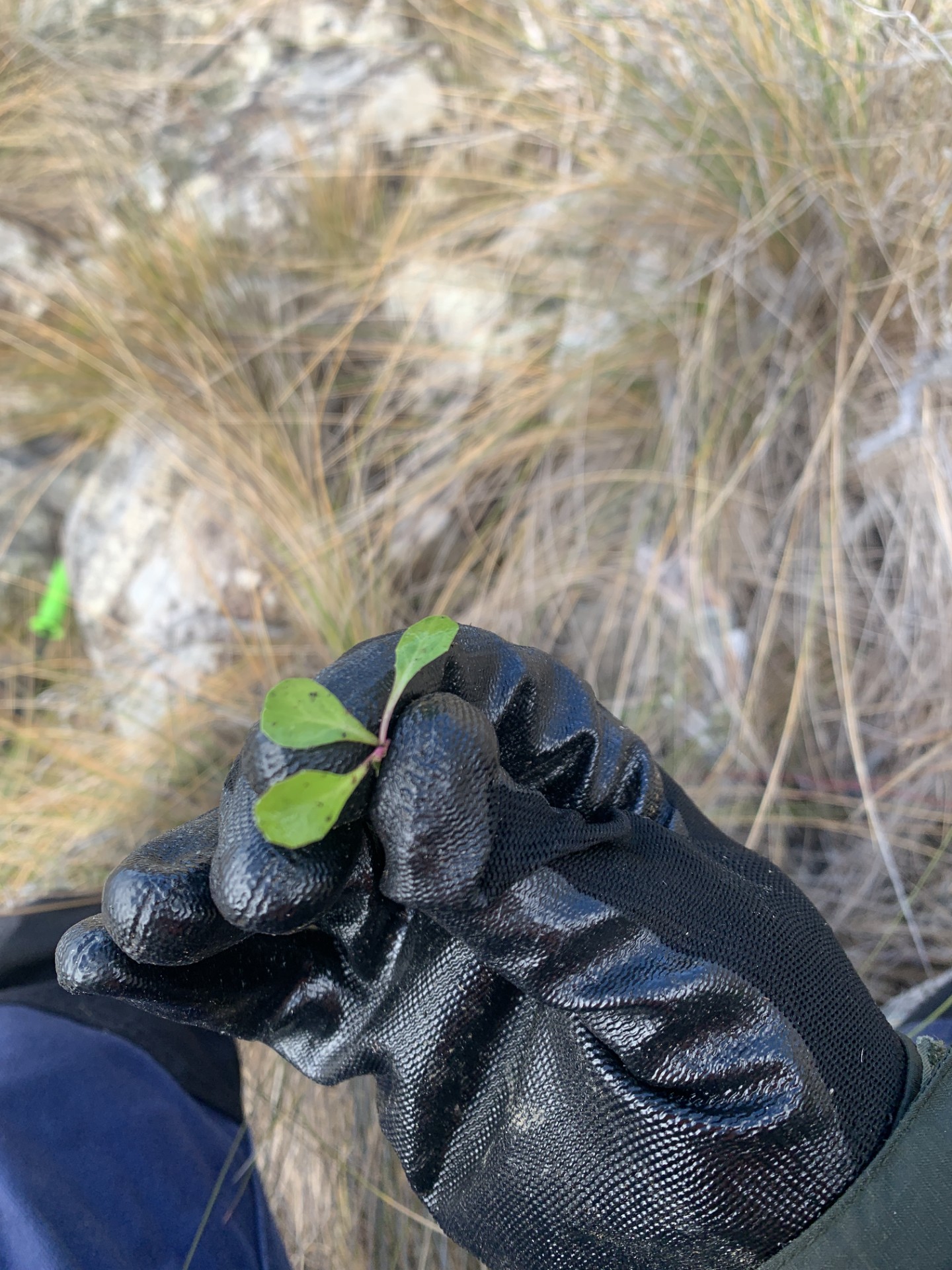
In November 2025, staff from NRM South joined Threatened Plants Tasmania volunteers to also remove mirror bush at Southport Bluff. This largely involved the removal of seedlings – which is the most effective approach as mirror bush becomes increasingly difficult to remove as plants mature and develop extensive root systems. Without this work, these seedlings would have matured into seed-producing adults, dramatically increasing the weed seed bank and intensifying future control requirements.
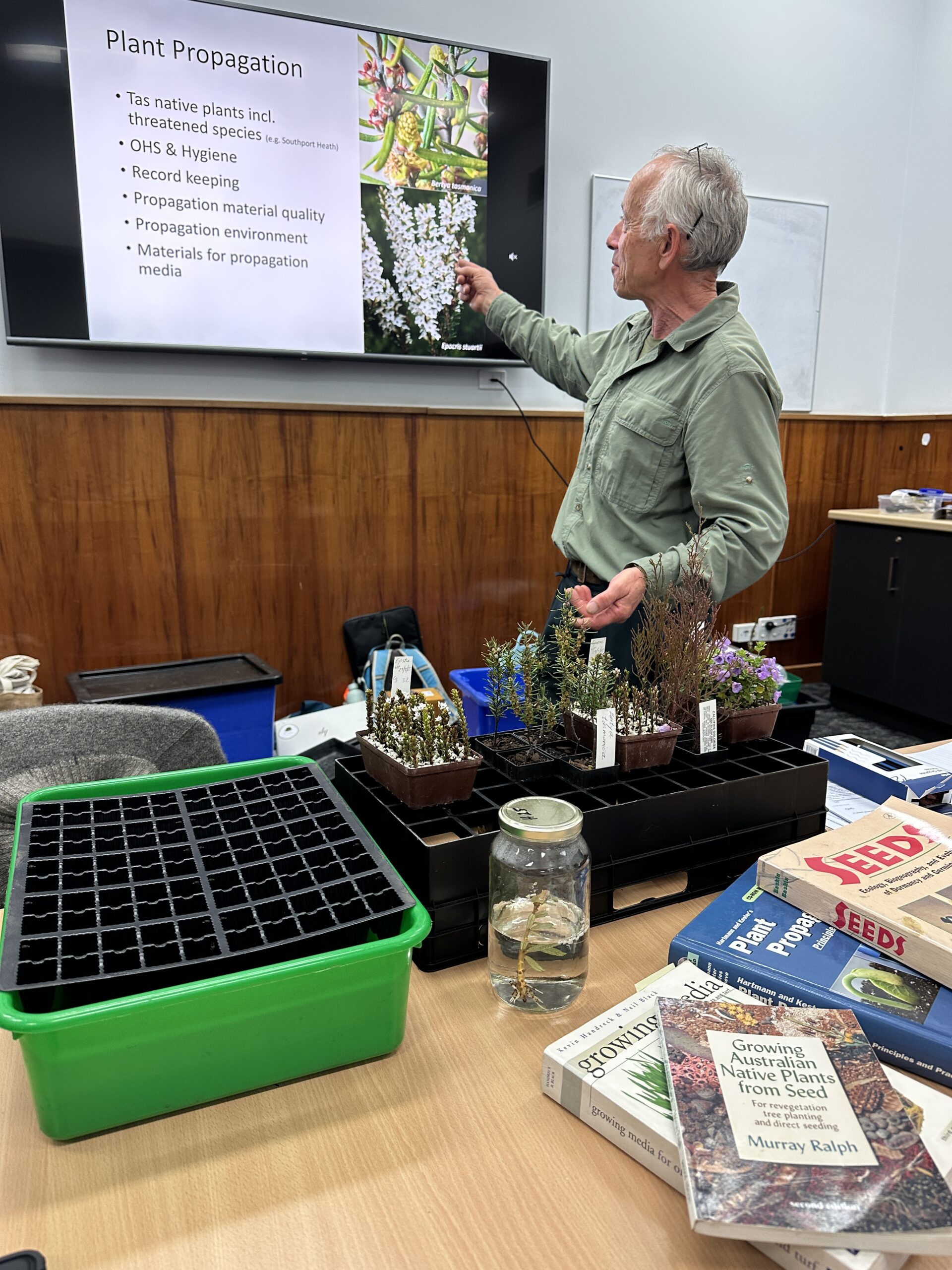
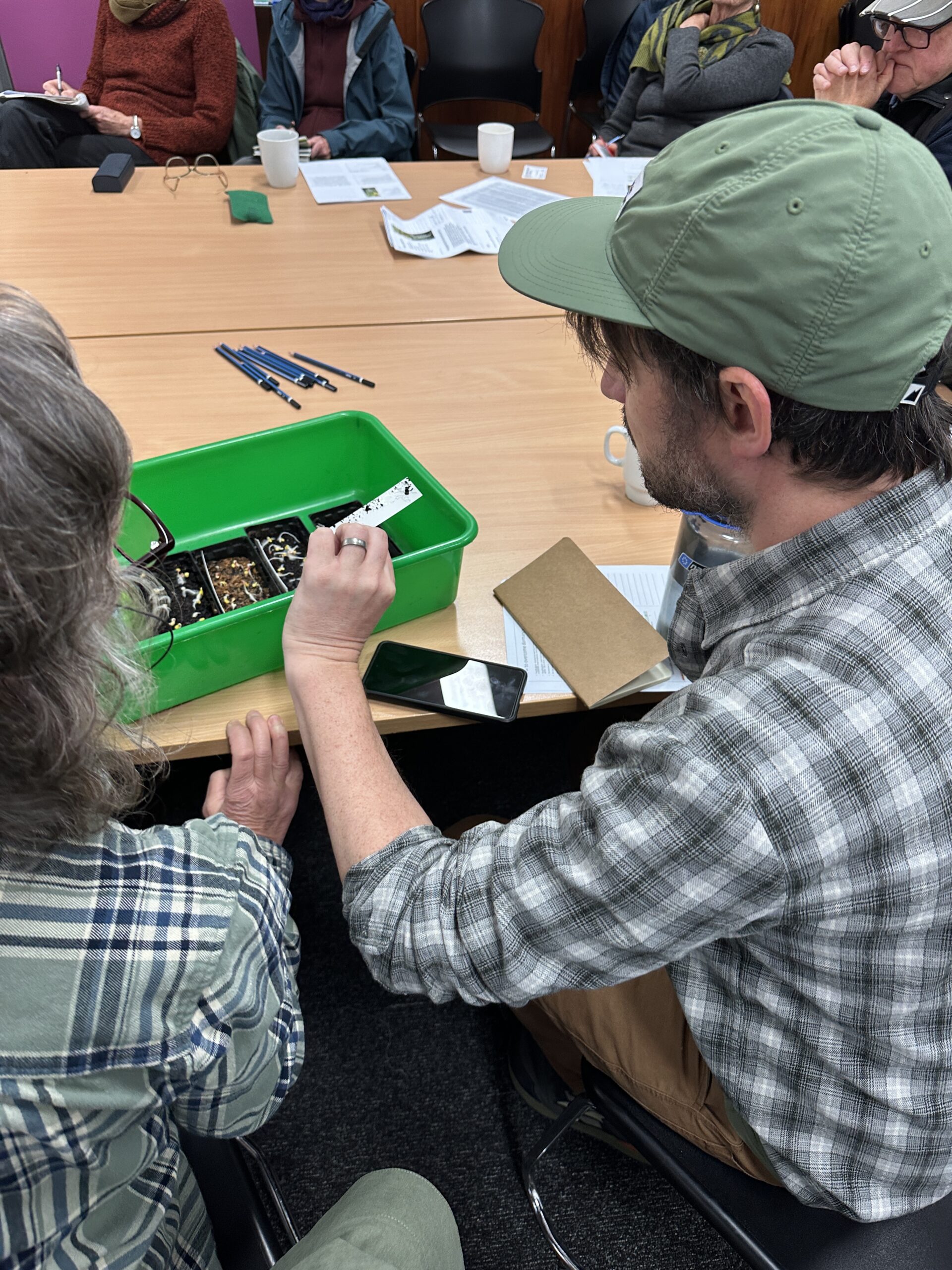
The project also delivered specialist training for Landcare nursery volunteers, equipping 18 participants from across southern Tasmania with skills in the propagation of threatened plants. By building expertise in seed collection, plant cultivation and biosecurity practices, the workshop has expanded Tasmania’s capacity to grow Southport heath for future conservation and restoration efforts and provided volunteers with transferable skills for working with other threatened Tasmanian plant species.
Encouragingly, surveys of the wild population at Southport Bluff revealed large numbers of seedlings alongside mature plants, providing evidence of ongoing natural recruitment. While overall population numbers remain lower than historical counts, the presence of young plants is a positive sign that the species is continuing to reproduce in the wild.
Another significant outcome came from testing for Phytophthora cinnamomi, a soil-borne plant pathogen capable of causing widespread dieback in susceptible native species. Four soil samples collected from Southport Bluff showed no evidence of the disease, confirming that the site remains free of this major threat. This result is crucial for conservation planning, as Phytophthora cinnamomi can cause severe dieback in Southport heath as well as other susceptible native species and would threaten the survival of this population.
Together, these outcomes represent important progress for one of Tasmania’s most vulnerable plant species. While ongoing management will be needed to address persistent threats, the project has strengthened the foundations for Southport heath’s long-term recovery through habitat protection, disease surveillance and increased community stewardship.
NRM South is supported by the Tasmanian Government. Click here to read more about the project.