
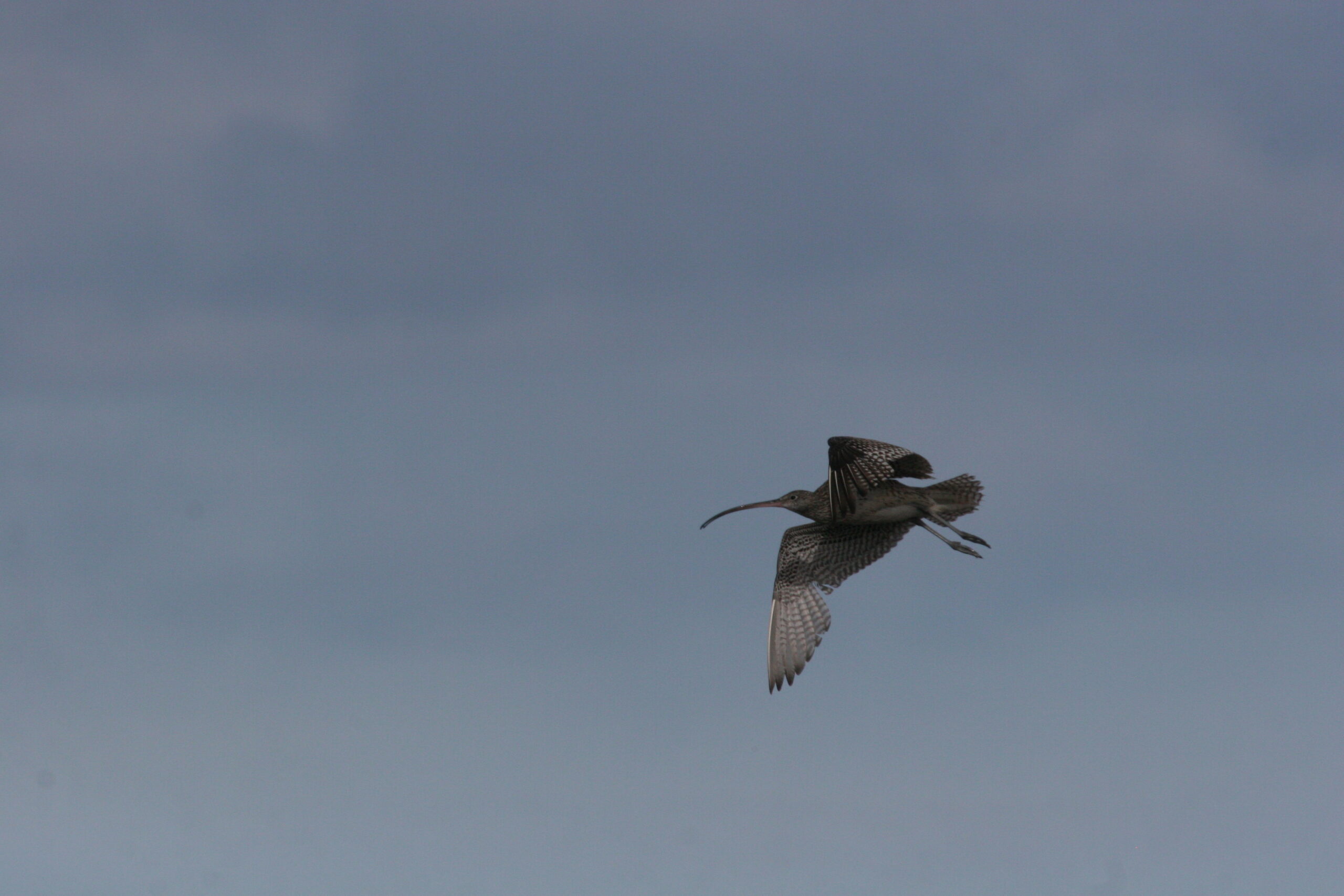
Orielton Lagoon, located on the doorstep of Hobart’s airport, is the southernmost stopover for some of the world’s most resilient travellers. Contained within the internationally significant Pitt Water–Orielton Lagoon Ramsar-listed wetland, and part of the East Asian–Australasian Flyway, the nutrient-rich sediments of Orielton Lagoon’s saltmarshes and tidal mudflats provide a buffet of plant life, insects, fish and crustaceans for migratory birds such as the Bar-tailed Godwit and Red-necked Stint.
The East Asian-Australasian Flyway extends from the far reaches of northern Alaska and Russia, through eastern Asia and the tropics, all the way down to the south of Tasmania and New Zealand. Migrating birds face many challenges along this path, including threats from hunting and vanishing habitat. Pitt Water-Orielton Lagoon is one of over 130 sites across 22 countries that are part of the East Asian – Australasian Flyway Site Network – a voluntary, non-binding, collaborative project.
NRM South has been supporting on-ground efforts in Pitt Water-Orielton Lagoon for close to two decades, and through our latest ‘Rivers to Ramsar’ project, we’re working with landholders and project partners to restore three key waterways that flow into the lagoon; Frogmore Creek, Orielton Rivulet and Sorell Rivulet. By improving these upstream systems, we aim to improve overall wetland health and support our important avian international visitors that rely on this site over the spring and summer months.


To measure the impact of on-ground works over this three-year project, it’s important to take baseline measurements for comparison. One of these measurements is surveying the presence and diversity of bird species at the site and seeing how this changes over time. Across December 2025 to January 2026, bird surveys recorded 56 species, with the highest diversity found in estuarine areas near the lagoon, where healthy tidal habitats support ducks, shorebirds and other waterbirds. Inland sites supported fewer species, reflecting more limited wetland habitat. Despite historical modification and altered water flows, the estuarine habitats around the Frogmore Creek/Orielton Rivulet confluence remain ecologically important, demonstrated by the continued presence of protected and migratory birds.

Notable species observed included Red-necked Stint, Red-capped Plover and Great-crested Grebe, while commonly observed species included Chestnut Teal, Kelp Gull, Masked Lapwing and Black Swan. Additionally, observations of Far Eastern Curlew (listed as Critically Endangered) and White-bellied Sea Eagle were recorded in estuarine areas, highlighting the importance of protecting and restoring these shoreline and shallow-water habitats. The presence of both introduced species (such as Common Starlings and European Goldfinch) and native species that indicate a disturbed habitat such as the Noisy Miner highlights the influence of the fragmented habitats of surrounding agricultural and peri-urban areas.
These surveys have given us a clear baseline to track change over time, with increasing use by migratory and waterbirds expected to signal improving habitat quality as restoration progresses.
Over the next 12 months, we aim to restore around five kilometres of riparian habitat across Frogmore Creek, Orielton Rivulet and Sorell Rivulet. This will include weed and willow removal and revegetating with diverse native plants that will provide food, shelter and nesting habitat for a range of bird species. Fencing will exclude stock to prevent bank trampling and erosion, improving water quality and supporting healthier riparian habitats for birds. Debris removal (including rubbish, old fencing and farm materials) will further restore natural riverbank structure, improving feeding areas and movement corridors for threatened and migratory birds.
This project is funded by the Australian Government’s Natural Heritage Trust under the Urban Rivers and Catchments Program, with the support of NRM South and Landcare Tasmania, Sorell Council, Sorell Landcare, TasWater and the Tasmanian Parks and Wildlife Service.