
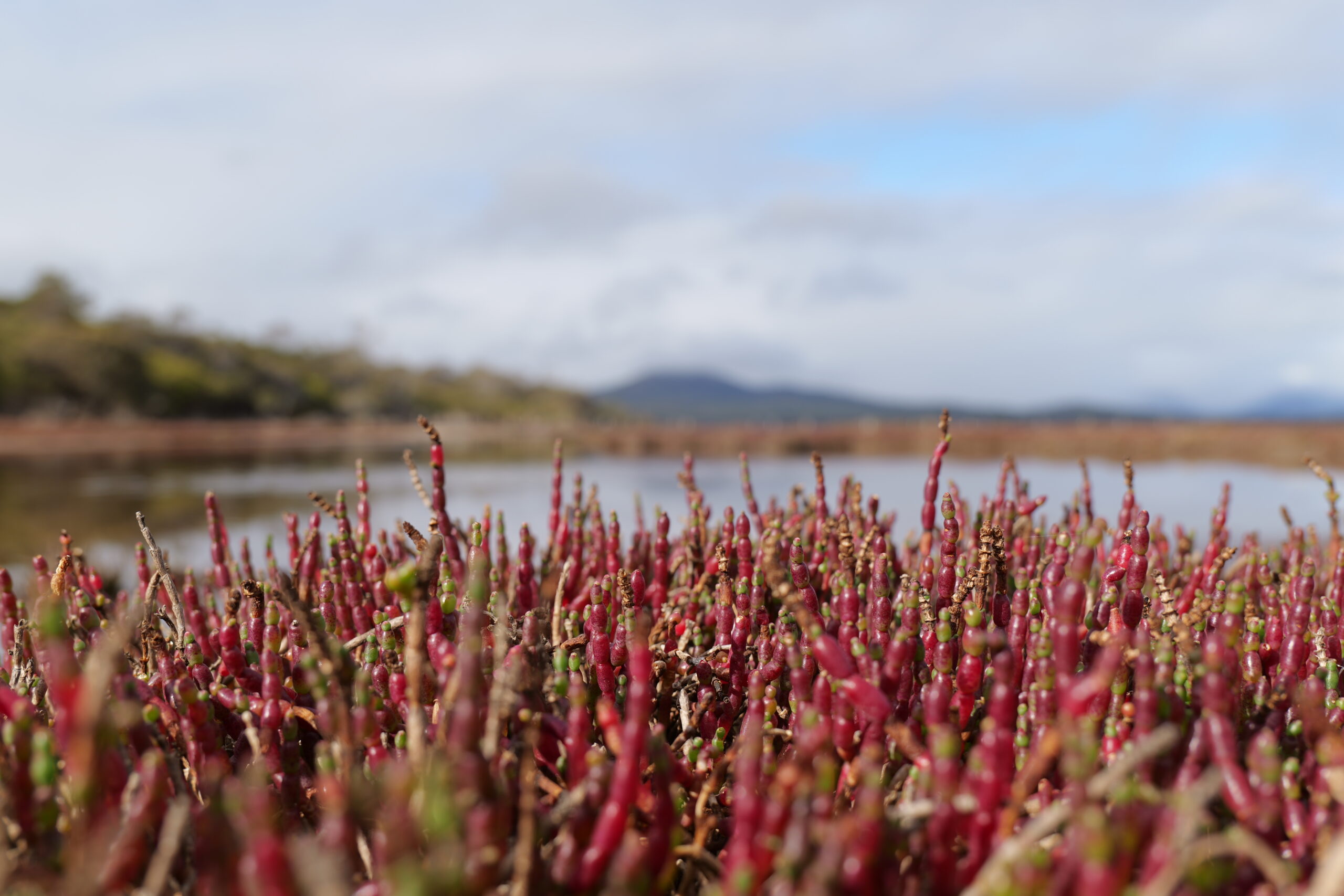
Moulting Lagoon, on Tasmania’s east coast, is one of our region’s most important coastal wetlands. Covering more than 6,000 hectares, it is recognised internationally under the Ramsar Convention on Wetlands for its outstanding ecological values and provides vital habitat for thousands of resident and migratory birds, as well as fish, invertebrates and other wildlife.
Among the lagoon’s most valuable ecosystems is its saltmarsh habitat. Saltmarshes are coastal wetlands dominated by salt-tolerant plants that thrive in the zone between land and sea. Although often overlooked, they play a vital role in maintaining healthy coastal environments.
Saltmarsh provides important nursery habitat for fish and invertebrates, supports a wide range of bird species, filters nutrients and sediment from runoff, and helps stabilise shorelines against erosion. It is also highly effective at storing carbon, offering an ecosystem-based approach in responding to climate change.
As part of our ‘Supporting Significant Wetlands‘ project at Moulting Lagoon, we are working to restore areas of saltmarsh at selected sites bordering the wetland – improving the overall health of the system through a collaborative approach with local landowners.
In mid-May 2026, NRM South and staff from our project partner The University of Tasmania ran a fieldwork event with 20 students from a TasTAFE Conservation and Ecosystem Management course in an area of wetland at Devil’s Corner Winery, whose property sits alongside Moulting Lagoon.
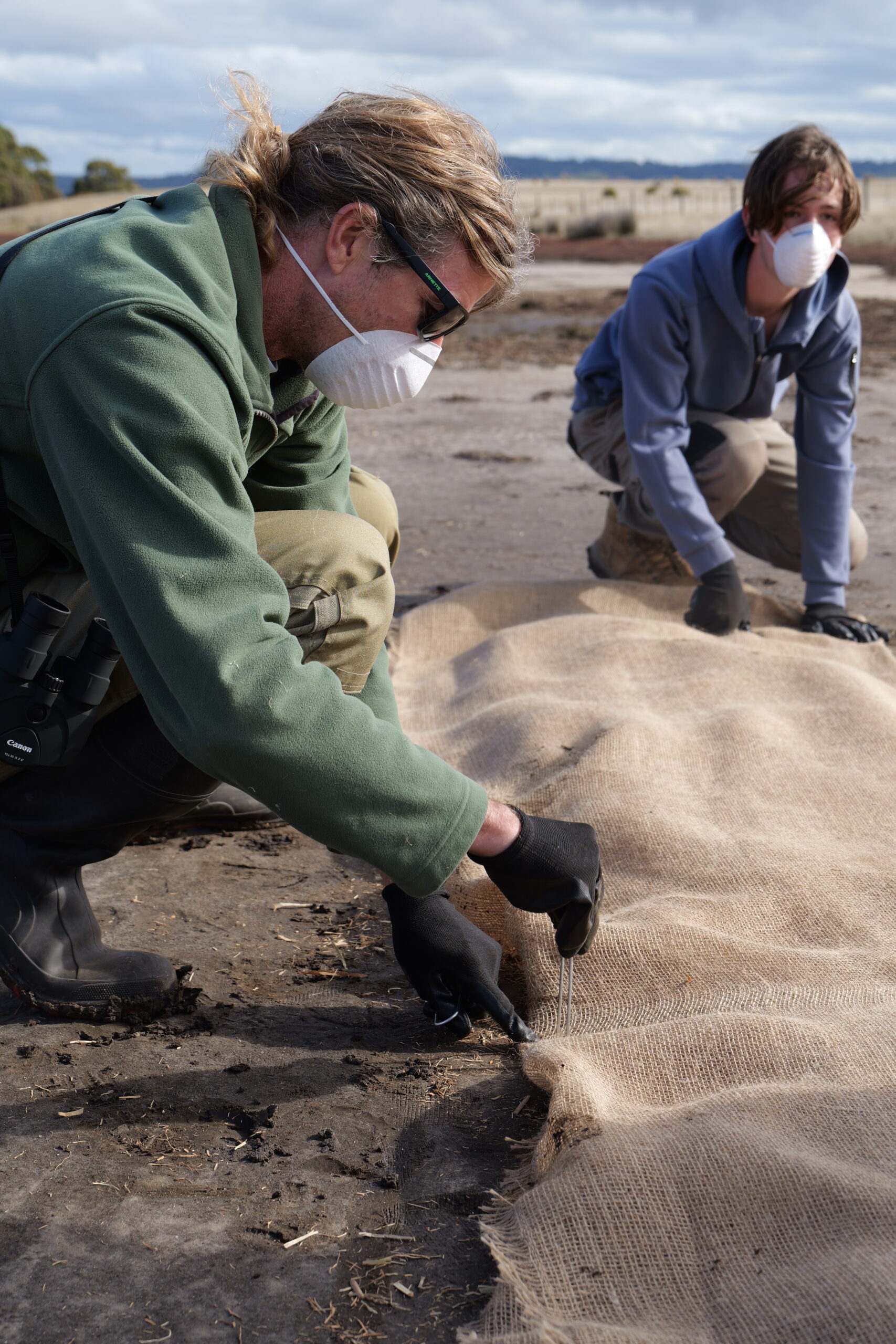
Across two days, students worked to set up a series of habitat augmentation structures that will help accelerate saltmarsh recovery at the site. Together we set up 40 sediment elevation tiles, structures made from soil, mulch and hessian that are pinned directly into place and that have been demonstrated to enhance saltmarsh regeneration.
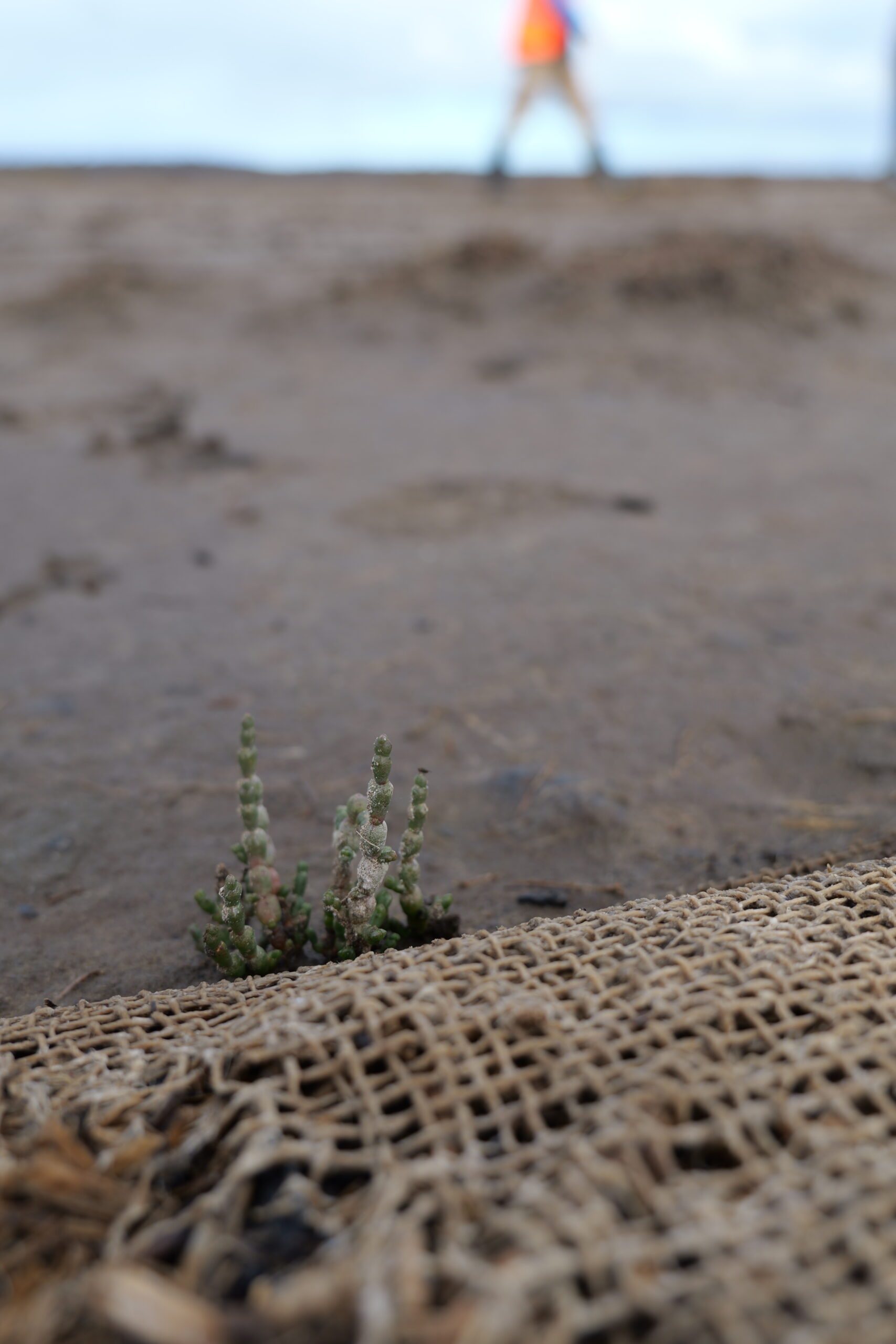
This is an approach that has been previously used in Moulting Lagoon. Saltmarsh regeneration can be an extremely slow, taking up to 20 years for a system to recover. By installing these biodegradable structures – essentially long, hessian-covered mounds covering a base of soil and mulch, the aim is to promote a faster rate of sediment deposition, encourage pioneer species to establish, and decrease the overall restoration time.
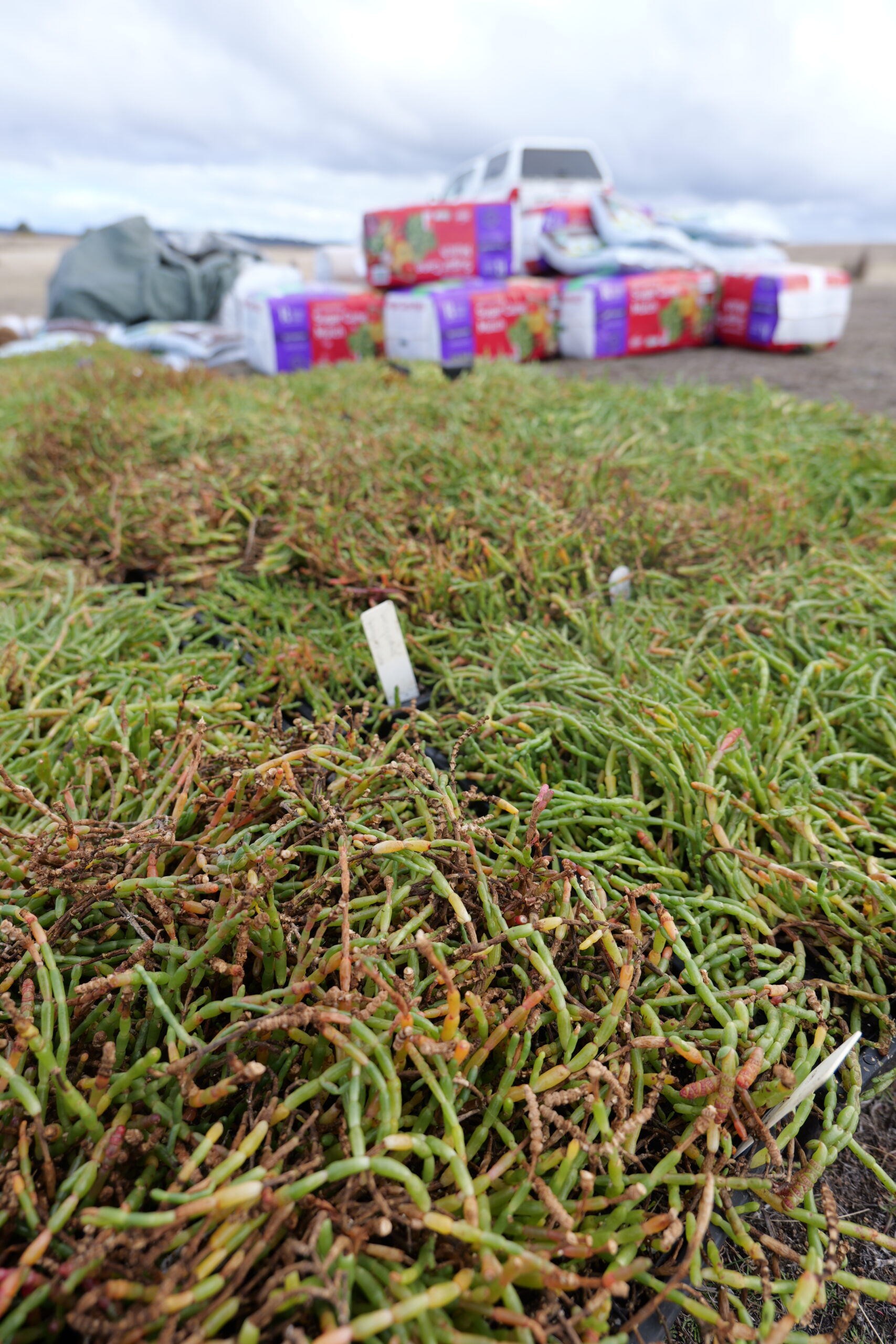
These structures were then planted out with 2,000 saltmarsh plants across approximately five hectares – a combination of approaches that will further accelerate the recovery process.
This fieldwork event was a great opportunity to collaborate on critical on-ground restoration actions and for TasTAFE students to get hands-on experience on a conservation project, and learn more about how novel techniques can be used to restore a degraded habitat.
We will continue monitoring to assess recovery of this protected area of saltmarsh – which will contribute to our understanding of how this approach could be used more extensively in future recovery efforts.
Protecting and restoring saltmarsh habitat at Moulting Lagoon helps safeguard the ecological health of the wetland and the many species that depend on it. Restoration efforts can improve habitat quality, increase resilience to climate change and support the long-term health of this internationally significant landscape.
This project is funded by the Australian Government’s Natural Heritage trust and delivered by NRM South, a member of the Commonwealth Regional Delivery Partners panel.